


 Contact Now

Send Message
Privacy statement: Your privacy is very important to Us. Our company promises not to disclose your personal information to any external company with out your explicit permission.
 Suzhou Delfino Environmental Technology Co., Ltd.
Select Language
English

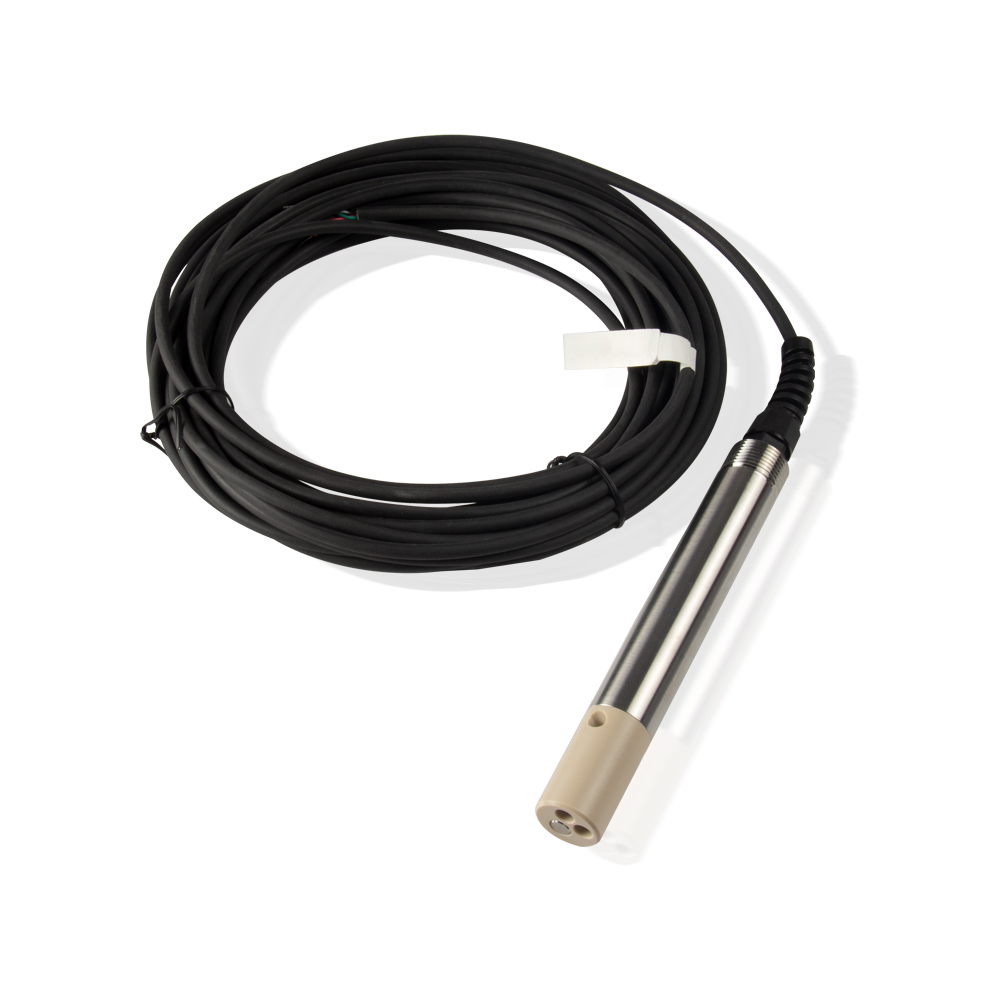

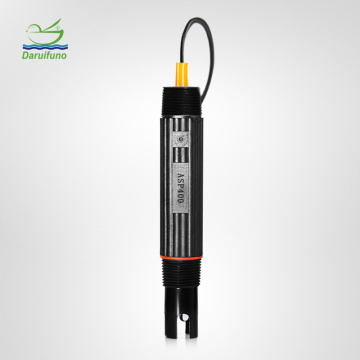
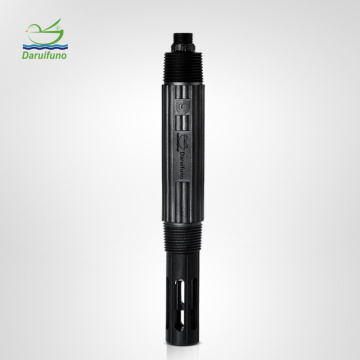
In the realm of industrial automation and environmental monitoring, conductivity sensors have emerged as a pivotal device, garnering increasing attention due to their exceptional performance and diverse range of applications. These sensors play a crucial role in measuring the electrical conductivity of various fluids, providing valuable insights into the composition and properties of these fluids. Their unique ability to detect minute changes in conductivity makes them indispensable in industries such as water treatment, food and beverage processing, chemical manufacturing, and many more. Furthermore, conductivity sensors are also widely used in environmental monitoring to assess the quality of natural water bodies, detect pollution levels, and monitor the impact of industrial activities on the ecosystem. As technology advances, these sensors are becoming more sophisticated, accurate, and reliable, further expanding their potential applications and solidifying their status as a key device in both industrial automation and environmental monitoring.

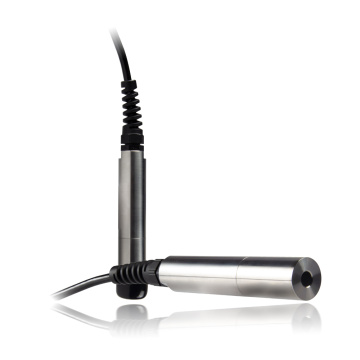
Conductivity sensors are known for their excellent protection level - IP68, which means that they can work continuously underwater for a long time without being affected by water erosion. This feature makes conductivity sensors play an irreplaceable role in ocean detection, underwater equipment monitoring, and real-time monitoring of water conservancy projects.
At the same time, it supports the standard Modbus protocol, can easily access standard industrial control systems, realize seamless data transmission and processing, and provide strong support for industrial automation.
In terms of measurement principle, the conductivity sensor adopts a 4-electrode conductivity battery design, which not only improves the accuracy of measurement, but also ensures the stability of the sensor in long-term use.
In addition, the sensor has the characteristics of non-polarization, can be used continuously online, does not need frequent calibration or replacement, and greatly reduces maintenance costs.
?
The application range of conductivity sensors is extremely wide. Due to its wide measurement range, it is not only suitable for freshwater environments, but also can work stably in complex environments such as seawater.
Its strong anti-pollution and anti-interference capabilities enable the sensor to maintain high-precision measurement in harsh environments, providing reliable data support for water quality monitoring, chemical production, food processing, and other fields.
?
It is worth mentioning that the digital conductivity sensor performs well in signal transmission. It supports RS485 interface and standard Modbus RTU communication protocol, which is conducive to long-distance signal transmission, and the signal attenuation is small, ensuring the accuracy and real-time nature of the data.
This feature gives digital conductivity sensors significant advantages in remote monitoring and automation control systems.
?
Regarding the application of conductivity sensors, in addition to measuring the conductivity of water, it can also measure parameters such as resistivity, total dissolved solids (TDS), and salinity of water through conversion relationships.
These parameters are of great significance for evaluating water quality, monitoring water pollution, and guiding agricultural production.
In summary, conductivity sensors have become an indispensable tool in the field of industrial automation and water quality monitoring with their excellent protection level, stable measurement performance, wide range of applications, and powerful digital communication capabilities. With the continuous advancement of technology and the continuous expansion of application fields, conductivity sensors will play a more important role in the future, bringing more convenience and security to human production and life.
About Us
Related Products List
Contact Us

Send Inquiry


Privacy statement: Your privacy is very important to Us. Our company promises not to disclose your personal information to any external company with out your explicit permission.
Fill in more information so that we can get in touch with you faster
Privacy statement: Your privacy is very important to Us. Our company promises not to disclose your personal information to any external company with out your explicit permission.