Home> Company News> Introduction to the detection method of COD BOD5 NH3-N in sewage treatment plants

Introduction to the detection method of COD BOD5 NH3-N in sewage treatment plants

2024,04,03

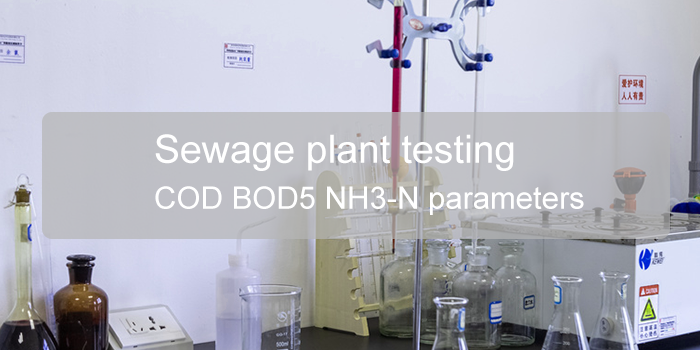
Sewage treatment plants are sewage and wastewater discharged from pollution sources. Because the total amount or concentration of pollutants is high and does not meet the discharge standard requirements or does not meet the environmental capacity requirements, thus reducing the water environment quality and functional objectives, it must undergo artificial intensification treatment. place. It is generally divided into urban centralized sewage treatment plants and decentralized sewage treatment plants for various pollution sources, which are discharged into water bodies or urban pipelines after treatment. Sewage treatment plants need to detect a variety of water quality parameters. Not only do they need online instruments for real-time continuous monitoring, sewage treatment plants also often use traditional methods to test samples. Next, let us take a look at several common detection methods for water quality parameters.


Collection and preservation of wastewater plant samples

  • Water samples from sewage treatment plants are divided into comprehensive water samples, instantaneous water samples, mixed water samples, and average water samples. Water samples are collected according to laboratory requirements.
  • When collecting samples, it is necessary to strictly distinguish the containers containing indicators of organic and inorganic substances, and use brown bottles for water samples that require light shielding. Samples for measuring pH, COD, BOD5, sulfide, oil, organic matter, suspended solids and other items cannot be mixed and can only be used individually.
  • When sampling directly with a sample container, it must be rinsed three times with water sample before sampling. But when there is oil floating on the water surface, the oil recovery container cannot be flushed.
  • When sampling, attention should be paid to removing debris, garbage and other floating objects on the water surface.
The container materials, protective agents added, their dosage and shelf life that should be selected for different monitoring projects are as follows:


Items

Sampling container

Preservative dosage

Shelf life

Sampling volume

COD

Rigid glass bottles

Add sulfuric acid, pH≤2

2d

500

BOD

Dissolved oxygen bottle

12h

250

Ammonia nitrogen

Rigid glass bottles, polyethylene buckets

Add sulfuric acid, pH≤1

24h

250


COD detection methods and precautions

  • Chemical oxygen demand refers to the amount of oxidants consumed by reducing substances that are easily oxidized by strong oxidants in water. It is a comprehensive indicator that characterizes reducing substances in water.
  • Different from the continuous monitoring principle of daruifuno`s optical method UV online COD Sensor, the sewage plant will use the traditional potassium dichromate method for samples
  • Use 0.25 mol/L potassium dichromate to measure water samples with COD between 50 and 700 mg/L, and use 0.025 mol/L potassium dichromate to measure water samples with COD between 5 and 50 mg/L.
  • Chloride ions can be oxidized by potassium dichromate, and can react with silver sulfate to produce precipitation, which affects the measurement results. Therefore, silver sulfate should be added to the water sample before reflux to form a complex to eliminate interference. When the chloride ion is greater than 1000mg/L, quantitative dilution should be done first to make the content less than 1000mg/L before measurement.
  • When taking water samples, shake them well and measure the mixed water samples
  • It needs to boil evenly during the heating process. After the water sample is heated and refluxed, the remaining amount of potassium dichromate in the solution should be 1/5-4/5 of the added amount.
  • Don`t feel warm when touching the reflux condenser tube, otherwise the measurement result will be low.
  • Do not shake the Erlenmeyer flask violently during titration, and the test solution in the bottle must not splash, otherwise the measurement results will be affected.

wastewater plant cod testing

BOD5 detection methods and precautions

  • The measurement method of biochemical oxygen demand is the dilution inoculation method. This method is suitable for measuring water samples with BOD greater than or equal to 2mg/L, and the maximum does not exceed 6000mg/L. When the BOD5 of the water sample is greater than 6000mg/L, it will cause dilution certain error.
  • The requirements for dilution water and inoculation dilution water are strict and are the main factors related to the success or failure of the experimental measurement and the accuracy of the measurement results.
  • During the operation, medicinal siphoning is used, and there should be no air bubbles left in the dissolved oxygen bottle.
  • During the dubbing process, the temperature is kept at 20±1℃, and be careful to add sealing water.
  • In actual work, for samples with two or three dilution ratios, where the consumed dissolved oxygen is greater than 2 mg/L, and the remaining dissolved oxygen is greater than 1 mg/L, the average value should be taken when calculating the results.


NH3-N detection methods and precautions

  • Nessler's reagent spectrophotometry
  • The alkaline solution of mercury iodide and potassium iodide reacts with ammonia to form a light reddish-brown colloidal compound. Its color is proportional to the ammonia nitrogen content. Its absorbance can usually be measured in the wavelength range of 410~425nm to calculate its content.
  • The ratio of mercury iodide to potassium iodide in Nessler's reagent has a great influence on the sensitivity of the color reaction. The precipitate formed after standing should be removed.
  • Ammonia-free water: Add 0.1ml of concentrated sulfuric acid to each liter of water, distill, discard 50ml of the initial distillate, and store the distillate in a ground glass container with a stopper, and store it with a tight stopper.
  • The color development time should be controlled at 10 minutes. The longer the time, the darker the color and the measured value will be larger.
  • When taking water samples, the ammonia nitrogen content should not exceed 0.1mg, and the sample absorbance value should be <0.7 which is relatively stable.


This method is suitable for one-time detection. If you need to continuously detect the ammonia nitrogen value of water quality in real time, you can use the NH351 online ammonia nitrogen sensor. It uses the ion selection method principle and can measure ammonia nitrogen values in the range of 0~1000mg/L.


Delfino focuses on the R&D and production of water quality analysis instruments. Its main products include pH ORP analyzer, conductivity analyzer, turbidity analyzer, COD analyzer, dissolved oxygen analyzer, ammonium analyzer, chlorine analyzer, etc. The above is an introduction to how to detect COD, BOD and ammonia nitrogen values in sewage plants. If you are interested in water quality monitoring equipment for sewage plants, please contact us!

Contact Us

Author:

Ms. Selena

Phone/WhatsApp:

++86 18013144571

Popular Products
You may also like
Related Information
Daruifuno Sensor & Probe-Pressure and Waterproof Test

In the field of water quality monitoring and analysis, Daruifuno's water quality instrument development team has stringent requirements on the performance of sensors, especially for waterproof...

Signal detection and temperature compensation calibration of fluorescent dissolved oxygen sensor

Overview As a high-precision water quality monitoring device, the signal detection process of fluorescent dissolved oxygen sensor involves knowledge and technology in multiple fields such as optics,...

The Characteristics and Applications of Electrode Glass Membrane

Introduction to Electrode Glass Membrane The electrode glass membrane, a critical component in pH electrodes, possesses a series of unique properties that make it suitable for use in harsh...

Water Quality Monitoring and Control: Optimizing Water Treatment with Sensors

Overview Water quality is a critical factor in environmental protection, industrial processes, and public health. Effective monitoring and control help maintain safe drinking water, optimize...

Related Categories

Email to this supplier

Subject:
Email:
Message:

Your message must be between 20-8000 characters

We will contact you immediately

Fill in more information so that we can get in touch with you faster

Privacy statement: Your privacy is very important to Us. Our company promises not to disclose your personal information to any external company with out your explicit permission.

Send