

Send Message
Privacy statement: Your privacy is very important to Us. Our company promises not to disclose your personal information to any external company with out your explicit permission.
 Suzhou Delfino Environmental Technology Co., Ltd.
Select Language
English
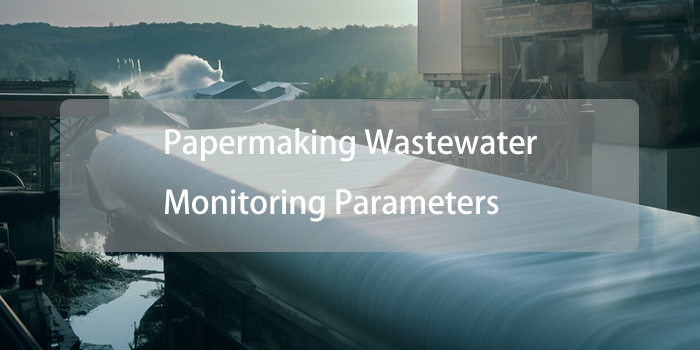
Water quality indicators are the main basis for monitoring, evaluating and pollution control of water bodies. Including physical indicators (suspended solid content, total solid content, turbidity, temperature, color, conductivity, etc.), chemical indicators (biochemical oxygen demand, chemical oxygen demand, total organic carbon, total organic chlorine, etc.), biological indicators (Total number of bacteria, number of E. coli), among which suspended solids content, biochemical oxygen consumption, and chemical oxygen consumption are currently the most important indicators for national control. The water quality of papermaking wastewater is relatively complex, and it is very important to monitor the water quality. So what are the water quality monitoring indicators for papermaking wastewater?
1. During the preparation, cooking and bleaching process of oxygen-demanding substances, the dissolved raw material components, such as fiber, methanol, formic acid and sugars, are easily broken down by microorganisms. If they are discharged into the water body with the wastewater, they will consume the dissolved substances in the water. Oxygen, when the oxygen consumption rate is greater than the reoxygenation rate of the water body, it will cause hypoxia in the water. When the oxygen concentration in the water is less than 4mg/L, fish will die. When it is less than 1~2mg/L, faculative microorganisms and anaerobic microorganisms will multiply in large numbers, thereby causing the water body to become corrupt.
2. Under certain conditions, the amount of dissolved oxygen required to consume the amount of organic matter dissolved in water that can be digested by microorganisms is called biochemical oxygen demand (BOD). Generally, the BOD for 5 days at 20℃ is used as the water quality parameter, can be written as BOD5, the unit is mg/L. In the pulp and paper industry wastewater, the lignin and macromolecular carbohydrates contained are generally difficult to biodegrade, so chemical oxygen demand (COD) is also commonly used to express the concentration of organic matter in the wastewater, that is, under high temperature and strong acidic conditions, use a strong oxidant to catalyze the oxidation of organic matter in the water, and measure the amount of oxygen in the consumed oxidant to express the concentration of organic matter in the wastewater.
3. pH value is also a common monitoring parameter in pulp and paper mill wastewater. The pH value depends on the pulping and bleaching method and the type of product. Sulfite pulp drainage is highly acidic, and kraft pulp is highly alkaline, but the pH value is adjusted to 6~8 before biological treatment or discharge.
4. The common characteristic of chemicals produced in the paper industry is that they are potentially toxic. Cleaning agents are mostly used in detergent felts, and surfactants are used as dispersants in the paper industry to prevent deposits in the system. In the paper industry, pesticides are broadly speaking, and are actually slime fungicides. Their function is to control the density of microorganisms in the wastewater system of the paper industry and prevent the growth of slime mold. Grease mainly comes from waste lubricating oil and fuel oil dripping. Industrial chemicals mainly refer to chemicals produced during pulping and bleaching processes.
The main organic chlorides in paper industry wastewater include chloroform and dioxins. Chloroform is a pollutant produced during the bleaching process and is toxic and carcinogenic. However, chloroform can decompose under certain conditions and will not have a long-term impact on the environment. Dioxins are chlorides that people are very concerned about. They are the general name for chlorinated polynuclear aromatic compounds and are also produced during the pulping and bleaching process.
Delfino company focuses on the R&D and production of water quality analysis instruments. Our measurement parameters include pH, ORP, conductivity, TDS, salinity, dissolved oxygen, COD, ammonia nitrogen, turbidity, chlorophyll, blue-green algae, residual chlorine, and chlorine dioxide. wait. In addition to ORP sensors, our main products include pH ORP analyzer, conductivity analyzer, turbidity analyzer, COD analyzer, dissolved oxygen analyzer, ammonium analyzer, chlorine analyzer, etc.
September 25, 2024
August 27, 2024
November 07, 2023
October 20, 2023
In the field of water quality monitoring and analysis, Daruifuno's water quality instrument development team has stringent requirements on the performance of sensors, especially for waterproof...
Overview As a high-precision water quality monitoring device, the signal detection process of fluorescent dissolved oxygen sensor involves knowledge and technology in multiple fields such as optics,...
Introduction to Electrode Glass Membrane The electrode glass membrane, a critical component in pH electrodes, possesses a series of unique properties that make it suitable for use in harsh...
Overview Water quality is a critical factor in environmental protection, industrial processes, and public health. Effective monitoring and control help maintain safe drinking water, optimize...
Email to this supplier
September 25, 2024
August 27, 2024
November 07, 2023
October 20, 2023
About Us
Related Products List
Contact Us

Send Inquiry
Privacy statement: Your privacy is very important to Us. Our company promises not to disclose your personal information to any external company with out your explicit permission.
Fill in more information so that we can get in touch with you faster
Privacy statement: Your privacy is very important to Us. Our company promises not to disclose your personal information to any external company with out your explicit permission.