

Send Message
Privacy statement: Your privacy is very important to Us. Our company promises not to disclose your personal information to any external company with out your explicit permission.
 Suzhou Delfino Environmental Technology Co., Ltd.
Select Language
English
?
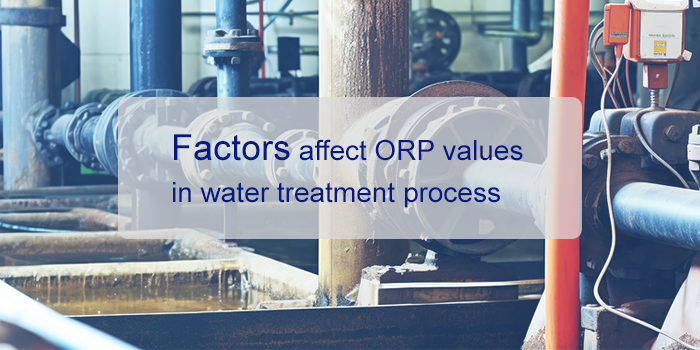
ORP has good application prospects in water quality treatment, circulating water treatment, desulfurization wastewater treatment, water treatment equipment, etc.. Since many redox reactions occur in wastewater treatment, and the factors that affect ORP in each reactor are also different, it is difficult to determine which factor is mainly responsible for the change in ORP. For example, there are many organic substances in the activated sludge treatment system. Large changes in the concentraction of organic substances are mainly caused by the changes in ORP. Therefore, before studying the indicative effect of ORP changes on sewage treatment, we should first understand the factors that affect its changes.
?
Factor 1:Dissolved oxygen (DO)
As we all know, DO represents the content of oxygen dissolved in water. In an aerobic pool, DO from the water outlet should be controlled at 2mg/L. If it is pure oxygen aeration, it should be 4mg/L. The DO of anoxic denitrification tank should be 0.5mg/L. In an anaerobic tank, molecular oxygen basically does not exist, and nitrate nitrogen is perferably less than 0.2mg/L. DO, as an oxidant in wastewater treatment, is the most direct cause of the increase in system ORP. In pure water, ORP has a liner relationship with the logarithm of DO, and ORP increase as DO increases.
Factor 2: pH
In wastewater treatment, pH values is an important control factor. The optimal pH value for the growth of aerobic microorganisms and fermentative acid-producing bacteria is 6.5 to 8.5, and the optimal pH value for anaerobic methanogens is 6.8 to 7.2. In order to control the appropriate pH value, it is generally controlled by adding alkali. The metabolic activity of microbial contaminants has a great influence on the pH value. In the acid-producing stage, acid-producing bacteria decompose macromolecular organic matter to produce fatty acids and carbon dioxide, which can lower the pH, but the ammonia produced during the decomposition of proteins can increase the pH value. During the methanogenesis stage, methanogens use acetic acid to produce methane, which can increase the pH value of the system.
?
Factor 3: Temperature
In the wastewater treatment process, temperature is a very important indicator. Aerobic microorganisms are active between 15 and 30℃, and the optimal temperature for anaerobic microorganisms are around 35℃ and 55℃. In the process of anaerobic wastewater treatment, temperature changes have an important impact on the composition and proliferation of microorganisms, methane production rate, sludge sedimentation performance, etc.. Therefore, in order to ensure the stability of the anaerobic tank operation, the wastewater enters the anaeronic tank. Previously, wastewater temperature was generally adjusted to 35℃ or 55℃ through cooling tower cooling and water vapor heating. Research practice shows that the higher the solution temperature, the lower the ORP of the solution; the same is true for the influence of temperature in the wastewater treatment process. In addition, the higher the temperature in the water treatment process, the lower the ORP, which is also related to the smaller water molecule clusters caused by the increase in temperature. In addition, changes in temperature can also lead to changes in pH, gas solubility, biological activity, and changes in the phase balance of water pollutants, thereby affecting ORP.
Factor 4: composition of microorganisms
In biological wastewater treatment system, a unique ecosystem exists. In the two-phase anaerobic bioreactor, the effective separation of acidogenic bacteria and methanogenic bacteria is achieved, which facilitates system control and management. In UASB where flocculent mud dominates, acidogenic bacteria and methanogenic bacteria were screened out along the direction of the water flow. In anaerobic granular mud and anaerobic biofilm, from the outside to the inside, the dominant bacterial species changes from acidogenic bacteria to methanogenic bacteria. In the anaerobic reaction system, the DO concentraction and ORP must be controlled very low, especially during the methanogenesis stage, the oxidation-reduction potential cannot be higher than -330mV. There will inevitably be DO in the incoming water, but under the influence of this unique ecosystem, through the synergy and symbiosis between aerobic microorganisms, faculative microorganisms, and anaerobic microorganisms, the ORP of the system quickly decrease to the range suitable for the growth of methanogens. This phenomenon of low redox potential not only exists in anaerobic reactors, but also occurs in floc mud in aeration tanks.
?
Factor 5: microbial activity
The activity of anaerobic activated sludge can be expressed by the maximum specific methane production rate and the maximum specific COD removal rate. The activity of aerobic activated sludge can also be expressed by the maximum specific COD removal rate. The higher the activity of microorganisms, the faster they consume oxygen and produce reducing substances, and the faster the ORP decreases. As a comprehensive indicator that reflects the macroscopic redox properties of water, ORP has many types of influencing factors. In addition to the above-mentioned main influencing factors, there are also factors such as pressure, organic matter, solid matter, and microbial species.
These factors are not isolated, they influence and restrict each other. Therefore, the redox properties of water bodies are also the result of the combined effects of multiple factors.
?
Delfino has many ORP sensors and ORP conttollers for online monitoring of water ORP values. Our company focuses on the R&D and production of water quality analysis instruments. Our measurement parameters include pH, ORP, conductivity, TDS, salinity, dissolved oxygen, COD, ammonia nitrogen, turbidity, chlorophyll, blue-green algae, residual chlorine, and chlorine dioxide. wait. Our main products include pH ORP analyzer, conductivity analyzer, turbidity analyzer, COD analyzer, dissolved oxygen analyzer, ammonium analyzer, chlorine analyzer, etc.
?

September 25, 2024
August 27, 2024

November 07, 2023

October 20, 2023
In the field of water quality monitoring and analysis, Daruifuno's water quality instrument development team has stringent requirements on the performance of sensors, especially for waterproof...
Overview As a high-precision water quality monitoring device, the signal detection process of fluorescent dissolved oxygen sensor involves knowledge and technology in multiple fields such as optics,...
Introduction to Electrode Glass Membrane The electrode glass membrane, a critical component in pH electrodes, possesses a series of unique properties that make it suitable for use in harsh...
Overview Water quality is a critical factor in environmental protection, industrial processes, and public health. Effective monitoring and control help maintain safe drinking water, optimize...
Email to this supplier
September 25, 2024
August 27, 2024
November 07, 2023
October 20, 2023
About Us
Related Products List
Contact Us

Send Inquiry
Privacy statement: Your privacy is very important to Us. Our company promises not to disclose your personal information to any external company with out your explicit permission.
Fill in more information so that we can get in touch with you faster
Privacy statement: Your privacy is very important to Us. Our company promises not to disclose your personal information to any external company with out your explicit permission.