


Send Message
Privacy statement: Your privacy is very important to Us. Our company promises not to disclose your personal information to any external company with out your explicit permission.
 Suzhou Delfino Environmental Technology Co., Ltd.
Select Language
English
A dual salt bridge reference electrode is uniquely designed with a Calomel electrode or Ag/AgCl electrode as the internal salt bridge and a saturated NaCl solution or other inert electrolyte solution as the external salt bridge. The internal salt bridge typically employs a saturated KCl solution.
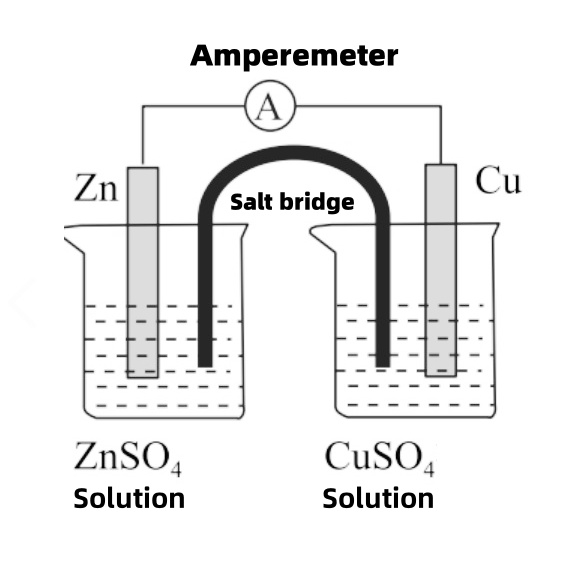
In electrochemical measurements, the main role of the reference electrode is to provide a stable potential reference for other electrodes (such as the working electrode). The dual salt bridge reference electrode, through its unique design, effectively isolates the internal salt bridge solution from the solution being measured, thereby eliminating the influence of the liquid junction potential and improving the accuracy and stability of the measurement.
Dual salt bridge reference electrodes are widely used in various fields, including:
Before using a dual salt bridge reference electrode, ensure that the liquid junction part of the electrode is fully wetted to ensure good electrical conductivity. Additionally, check that the salt bridge solution inside the electrode is sufficient and avoid generating bubbles.
When installing the dual salt bridge reference electrode, ensure that the second section of the salt bridge solution is filled with an appropriate inert electrolyte solution before use. Furthermore, avoid exposing the electrode to mechanical pressure or temperature changes.
Dual salt bridge reference electrodes require regular cleaning and maintenance to maintain their long-term stable performance. When cleaning, use appropriate cleaners and tools to avoid damaging the electrode surface.
When not in use, store the dual salt bridge reference electrode in a dry, cool environment, avoiding direct sunlight and high temperatures. For electrodes that are not used for a long time, take appropriate preservation measures, such as soaking the electrode in a specific preservation solution.
When selecting a dual salt bridge reference electrode, consider factors such as the properties of the solution being measured, the measurement range, and precision requirements. Additionally, choose the appropriate electrode type and specification based on the actual application scenario.
During use, avoid exposing the electrode to strong oxidants, strong acids, strong bases, and other corrosive substances. Furthermore, when measuring electrochemical systems with high current densities, be cautious to prevent polarization of the reference electrode.
The Daruifuno ASP Series analog pH sensors and probes incorporate Ag/AgCl dual salt bridge reference electrodes, enhancing their precision and reliability in pH measurements. For more information on our analog pH sensors and probes, visit our Analog PH Sensor and Probe Classification page.

September 25, 2024

August 27, 2024

November 07, 2023

October 20, 2023
In the field of water quality monitoring and analysis, Daruifuno's water quality instrument development team has stringent requirements on the performance of sensors, especially for waterproof...
Overview As a high-precision water quality monitoring device, the signal detection process of fluorescent dissolved oxygen sensor involves knowledge and technology in multiple fields such as optics,...
Introduction to Electrode Glass Membrane The electrode glass membrane, a critical component in pH electrodes, possesses a series of unique properties that make it suitable for use in harsh...
Overview Water quality is a critical factor in environmental protection, industrial processes, and public health. Effective monitoring and control help maintain safe drinking water, optimize...
Email to this supplier
September 25, 2024
August 27, 2024
November 07, 2023
October 20, 2023
About Us
Related Products List
Contact Us

Send Inquiry
Privacy statement: Your privacy is very important to Us. Our company promises not to disclose your personal information to any external company with out your explicit permission.
Fill in more information so that we can get in touch with you faster
Privacy statement: Your privacy is very important to Us. Our company promises not to disclose your personal information to any external company with out your explicit permission.