

Send Message
Privacy statement: Your privacy is very important to Us. Our company promises not to disclose your personal information to any external company with out your explicit permission.
 Suzhou Delfino Environmental Technology Co., Ltd.
Select Language
English
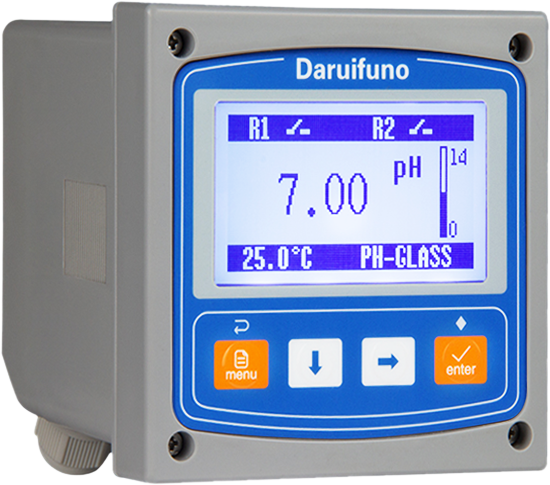
In industrial process control and wastewater treatment, pH and ORP (Oxidation-Reduction Potential) measurements are critical parameters. Selecting the appropriate industrial pH controller or ORP controller is essential for ensuring process stability, product quality, and regulatory compliance. This guide will help you choose the most suitable pH/ORP control system for your industrial needs.
?
First, identify your specific industrial application:
Different industries have varying requirements for pH control equipment and ORP measurement devices. For example, the food industry often requires hygienic designs, while chemical plants may need explosion-proof models.
Ensure the controller covers the full range of pH/ORP values in your process. Industrial pH controllers typically need 0-14pH full-range measurement capability.
Choose appropriate accuracy based on process sensitivity. Industrial-grade pH meters should achieve at least ±0.1pH accuracy.
Select models with Automatic Temperature Compensation (ATC) to eliminate measurement errors caused by temperature variations.
Electrode and sensor materials must be compatible with your process media. Consider corrosion resistance requirements for industrial pH sensors.
Determine whether you need analog outputs (4-20mA), relay controls, or digital communication interfaces (like Modbus) in your process control system.
For harsh industrial environments, look for rugged pH/ORP controllers with IP65 or higher protection ratings and chemical-resistant housings.
Choose between pH-only, ORP-only, or combined pH/ORP controllers based on your simultaneous monitoring needs.
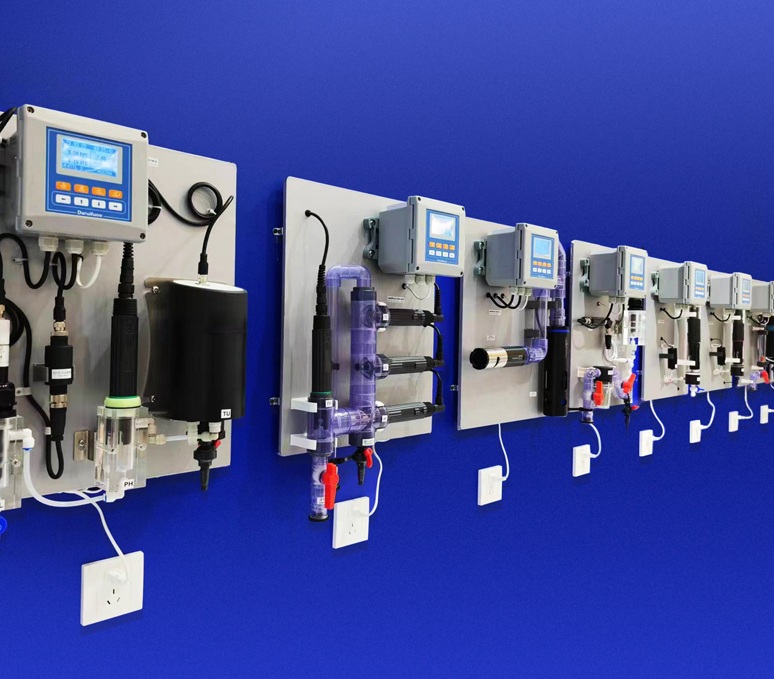
Consider installation environment and operator accessibility when selecting the mounting style for your Water Quality Controller.
Modern industrial pH/ORP controllers may include:
Choosing industrial-grade pH controllers from reputable manufacturers ensures:
Consider the maintenance aspects of your process instrumentation:
Regular calibration is crucial for maintaining accurate pH/ORP measurements. Controllers with auto-calibration or calibration reminder features can significantly reduce maintenance workload.
Selecting the right industrial pH/ORP controller requires careful consideration of application requirements, measurement needs, environmental conditions, and maintenance factors. While high-quality controllers may have higher initial costs, they typically offer more reliable performance and lower total cost of ownership in the long run.
Need help selecting the perfect pH/ORP control system for your industrial application? Visit our pH/ORP Controllers category page for product information and technical support. Our online sales managers will provide personalized recommendations based on your specific process requirements.
September 25, 2024
August 27, 2024

November 07, 2023
October 20, 2023
In the field of water quality monitoring and analysis, Daruifuno's water quality instrument development team has stringent requirements on the performance of sensors, especially for waterproof...
Overview As a high-precision water quality monitoring device, the signal detection process of fluorescent dissolved oxygen sensor involves knowledge and technology in multiple fields such as optics,...
Introduction to Electrode Glass Membrane The electrode glass membrane, a critical component in pH electrodes, possesses a series of unique properties that make it suitable for use in harsh...
Overview Water quality is a critical factor in environmental protection, industrial processes, and public health. Effective monitoring and control help maintain safe drinking water, optimize...
Email to this supplier
September 25, 2024
August 27, 2024
November 07, 2023
October 20, 2023
About Us
Related Products List
Contact Us

Send Inquiry
Privacy statement: Your privacy is very important to Us. Our company promises not to disclose your personal information to any external company with out your explicit permission.
Fill in more information so that we can get in touch with you faster
Privacy statement: Your privacy is very important to Us. Our company promises not to disclose your personal information to any external company with out your explicit permission.