

Send Message
Privacy statement: Your privacy is very important to Us. Our company promises not to disclose your personal information to any external company with out your explicit permission.
 Suzhou Delfino Environmental Technology Co., Ltd.
Select Language
English
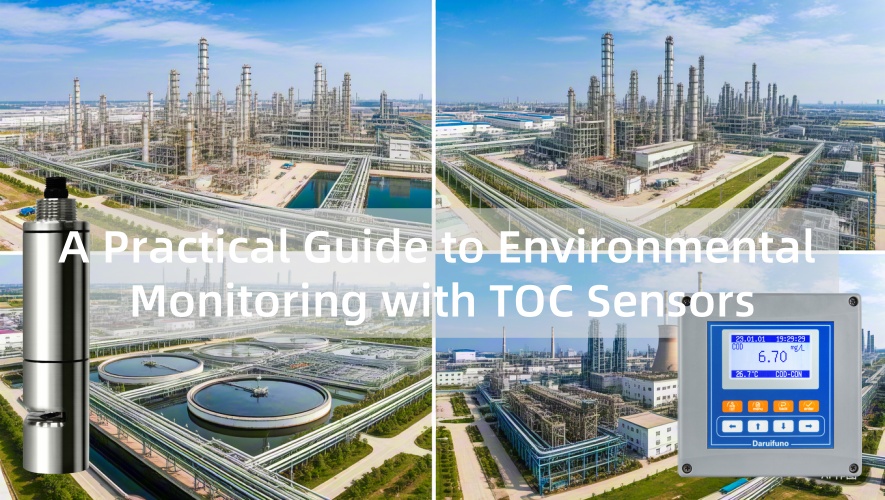
In environmental monitoring and wastewater treatment, Total Organic Carbon (TOC) is a critical parameter for assessing the level of organic pollution in water. A TOC sensor is a specialized device that measures the amount of organic carbon present in a water sample. These sensors are widely used in industries such as pharmaceuticals, chemicals, power plants, and municipal water treatment facilities, helping operators understand pollution levels, ensure compliance, and improve treatment efficiency.?
?
TOC sensors typically operate by oxidizing organic compounds in the sample and measuring the resulting carbon dioxide. This is often done through ultraviolet (UV) oxidation or thermal combustion. The CO2 produced is then detected by an infrared or conductivity detector, and the total amount of organic carbon is calculated.?
Compared to traditional laboratory TOC analyzers, modern in-line TOC sensors provide real-time, continuous monitoring, allowing for faster response and better process control.?
?
While TOC measures the total amount of carbon in organic compounds, Chemical Oxygen Demand (COD) measures the equivalent oxygen required to chemically oxidize organic matter in water. Interestingly, many COD sensors are designed to also provide TOC measurements, especially those using optical or UV absorption methods. This makes COD sensors a highly versatile tool for organic pollution monitoring.?
Moreover, advanced COD sensors can estimate Biochemical Oxygen Demand (BOD) as well, based on empirical correlations with COD and TOC values. Therefore, one sensor device can potentially deliver COD, TOC, and even BOD estimations, streamlining environmental data collection and reducing maintenance requirements.?
?
TOC sensors are used in a wide variety of fields, including:?
Monitoring TOC in real-time helps industries and governments make informed decisions on water management, avoid environmental penalties, and optimize operational efficiency. With modern sensors supporting multiple parameters, including TOC, COD, and BOD, it becomes easier to maintain regulatory compliance while minimizing equipment costs.?
?
If you're interested in finding a reliable solution that integrates TOC and COD measurements into one device, we invite you to explore our TOC COD Sensor product category. Daruifuno offers customizable, cost-effective sensor systems designed for industrial and municipal water monitoring applications. OEM and private label options are also available.?

September 25, 2024
August 27, 2024

November 07, 2023

October 20, 2023
In the field of water quality monitoring and analysis, Daruifuno's water quality instrument development team has stringent requirements on the performance of sensors, especially for waterproof...
Overview As a high-precision water quality monitoring device, the signal detection process of fluorescent dissolved oxygen sensor involves knowledge and technology in multiple fields such as optics,...
Introduction to Electrode Glass Membrane The electrode glass membrane, a critical component in pH electrodes, possesses a series of unique properties that make it suitable for use in harsh...
Overview Water quality is a critical factor in environmental protection, industrial processes, and public health. Effective monitoring and control help maintain safe drinking water, optimize...
Email to this supplier
September 25, 2024
August 27, 2024
November 07, 2023
October 20, 2023
About Us
Related Products List
Contact Us

Send Inquiry
Privacy statement: Your privacy is very important to Us. Our company promises not to disclose your personal information to any external company with out your explicit permission.
Fill in more information so that we can get in touch with you faster
Privacy statement: Your privacy is very important to Us. Our company promises not to disclose your personal information to any external company with out your explicit permission.