Home> Industry News> MCC200_A4_A8 Multi-Channel Universal Controller Mechanical Installation Guide

MCC200_A4_A8 Multi-Channel Universal Controller Mechanical Installation Guide

2025,05,15

Overview

Proper mechanical installation of the MCC200_A4_A8 Multi-Channel Universal Controller is crucial for ensuring stable operation and long-term reliability, especially when used for online control of critical water quality parameters such as pH and ORP. This guide provides detailed installation steps and considerations to help users successfully install the controller for effective water quality monitoring.

MCC200_A4_A8 Multi-Channel Universal Controller Mechanical Installation Guide

1. Pre-Installation Preparation

  • Check the Equipment: Before installation, carefully inspect the controller and its accessories for completeness and any damage. Confirm that the controller supports sensors for measuring water quality parameters like pH and ORP.
  • Select Installation Location: Choose a dry, well-ventilated environment free from corrosive gases and strong electromagnetic interference. Consider the actual needs of the water quality monitoring point.
  • Prepare Tools: Gather necessary installation tools such as screwdrivers, wrenches, and a level.
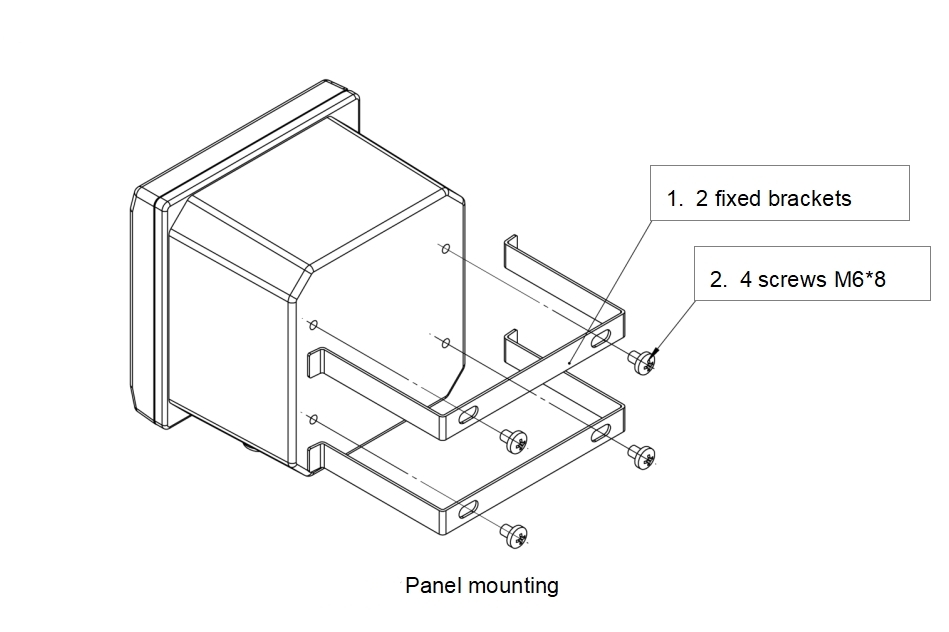
Panel mounting

2. Installation Methods

The MCC200_A4_A8 Multi-Channel Universal Controller supports three installation methods: panel mounting, wall mounting, and pipe mounting. Users can choose the appropriate method based on the actual needs of the water quality monitoring point.

2.1 Panel Mounting

  • Installation Steps:
    1. Secure the controller to the panel using two mounting brackets. Ensure the brackets are firmly installed without any wobbling.
    2. Place the controller on the brackets and adjust its position to be level for accurate measurement.
    3. Fasten the controller to the brackets using M6*8 screws, being careful not to overtighten and damage the controller.
  • Notes:
    • Ensure the panel is flat and free from deformation to avoid affecting the controller's installation stability and measurement accuracy.
    • Avoid applying excessive force to the controller during installation, especially when connecting precision sensors for pH and ORP measurements.

2.2 Wall Mounting

  • Installation Steps:
    1. Attach the gray backplate to the controller.
    2. Secure the backplate to the wall or box sidewall using M6*14 304 stainless steel pan head screws, considering the actual space layout of the water quality monitoring point.
    3. Adjust the controller's position to ensure it is level and firmly fixed for accurate readings of water quality parameters like pH and ORP.
  • Notes:
    • The wall or box sidewall should be flat, sturdy, and capable of bearing the controller's weight and operational vibrations, especially during long-term water quality monitoring.
    • Maintain appropriate clearance between the controller and the wall or box during installation to facilitate heat dissipation and maintenance, ensuring the continuous stable operation of the water quality monitoring equipment.

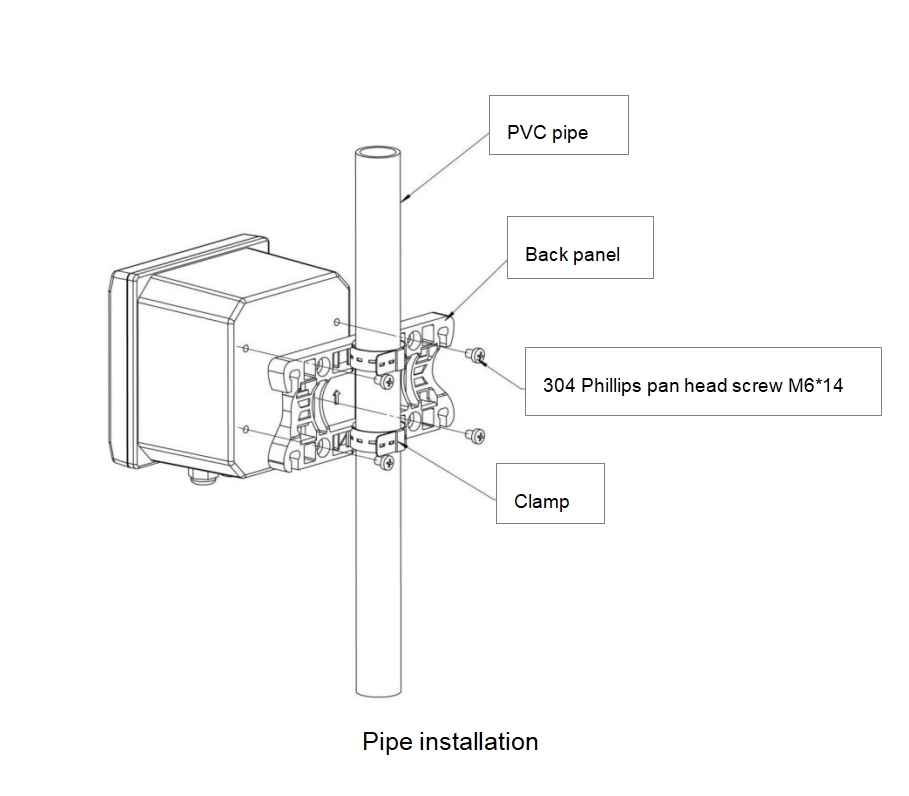
2.3 Pipe Mounting

  • Installation Steps:
    1. Attach the gray backplate to the controller.
    2. Fix the backplate to a horizontal or vertical pipe using a clamp suitable for the pipe diameter, adapting to the pipeline layout of the water quality monitoring point.
    3. Adjust the controller's position to ensure it is level and firmly stable for accurate monitoring of water quality parameters such as pH and ORP within the pipeline.
  • Notes:
    • The pipe should be flat and free from vibrations, capable of bearing the controller's weight and operational vibrations, especially during monitoring of flowing water quality.
    • Avoid applying excessive force to the pipe during installation to prevent damage to the pipe or controller, which could affect the accuracy of water quality monitoring.
Pipe Mounting Diagram

3. Post-Installation Checks

  • Check Fixation: Confirm that the controller is firmly fixed in the installation position without any wobbling or loosening to ensure the stability of water quality monitoring data.
  • Check Wiring: Ensure all connections are correctly made, especially those with sensors for water quality parameters like pH and ORP, without any looseness or short circuits.
  • Power-On Test: After confirming the installation is correct, perform a power-on test to check if the controller is functioning properly, particularly the display and recording functions for water quality parameters such as pH and ORP.

4. Conclusion

The mechanical installation process of the MCC200_A4_A8 Multi-Channel Universal Controller is relatively straightforward but requires attention to detail and proper procedures, especially when used for online control of water quality parameters like pH and ORP. Correct installation ensures the stable operation and long-term reliability of the controller, providing accurate and reliable data support for water quality monitoring. We hope this guide will assist users in successfully completing the mechanical installation of the controller and maximizing its effectiveness in the field of water quality monitoring. For any questions or further assistance, please contact our technical support team.

If you are looking for a suitable water quality parameter controller, welcome to visit our official website. Browse the Water Quality Monitor Category and the pH ORP Controller Category to find more water quality instruments that meet your needs. Our professional team will wholeheartedly provide you with detailed product information and excellent technical support to help you choose the most suitable controller to meet your monitoring needs.

Contact Us

Author:

Ms. Selena

Phone/WhatsApp:

++86 18013144571

Popular Products
You may also like
Related Information
Daruifuno Sensor & Probe-Pressure and Waterproof Test

In the field of water quality monitoring and analysis, Daruifuno's water quality instrument development team has stringent requirements on the performance of sensors, especially for waterproof...

Signal detection and temperature compensation calibration of fluorescent dissolved oxygen sensor

Overview As a high-precision water quality monitoring device, the signal detection process of fluorescent dissolved oxygen sensor involves knowledge and technology in multiple fields such as optics,...

The Characteristics and Applications of Electrode Glass Membrane

Introduction to Electrode Glass Membrane The electrode glass membrane, a critical component in pH electrodes, possesses a series of unique properties that make it suitable for use in harsh...

Water Quality Monitoring and Control: Optimizing Water Treatment with Sensors

Overview Water quality is a critical factor in environmental protection, industrial processes, and public health. Effective monitoring and control help maintain safe drinking water, optimize...

Related Categories

Email to this supplier

Subject:
Email:
Message:

Your message must be between 20-8000 characters

We will contact you immediately

Fill in more information so that we can get in touch with you faster

Privacy statement: Your privacy is very important to Us. Our company promises not to disclose your personal information to any external company with out your explicit permission.

Send