

Send Message
Privacy statement: Your privacy is very important to Us. Our company promises not to disclose your personal information to any external company with out your explicit permission.
 Suzhou Delfino Environmental Technology Co., Ltd.
Select Language
English
In various scenarios such as water quality monitoring, environmental detection, and industrial production, the content of Total Organic Carbon (TOC) is a key indicator for assessing water quality, pollutant emissions, and production process control. Selecting an appropriate TOC Sensor is crucial for obtaining accurate and reliable detection data. However, with a wide variety of TOC Sensors available on the market, each with different functions, how to precisely match the best sensor according to your own needs has become a challenging problem. Below, we will provide a clear selection approach by constructing a decision tree.

If it is used for environmental monitoring, such as monitoring the water quality of natural water bodies like rivers, lakes, and oceans, high precision and stability of the sensor are required. Since the changes in organic carbon content in environmental water bodies can be complex, and the monitoring results are often used for environmental assessment and policy-making, the sensor needs to be able to provide long-term, stable, and accurate measurement data. Additionally, considering that environmental monitoring is usually carried out in the field, the sensor's anti-interference ability and environmental adaptability are also very important.

In industrial production, such as in the pharmaceutical, chemical, and food and beverage industries, TOC Sensors are mainly used for real-time monitoring of water quality during the production process to ensure product quality and production safety. In this case, the response speed and real-time performance of the sensor are key factors. It needs to be able to quickly detect changes in the organic carbon content of the water quality and provide timely feedback to the control system for adjustment. Furthermore, the sensor should have a certain degree of corrosion resistance to adapt to various chemical substances that may be present in industrial production.
Laboratory research has high requirements for the precision and versatility of TOC Sensors. Researchers may need to accurately measure the organic carbon content of different samples and conduct in-depth data analysis. Therefore, the sensor should have high resolution and a wide measurement range to meet various experimental needs. At the same time, some laboratories may also require the sensor to have data storage and transmission functions to facilitate subsequent data processing and analysis.
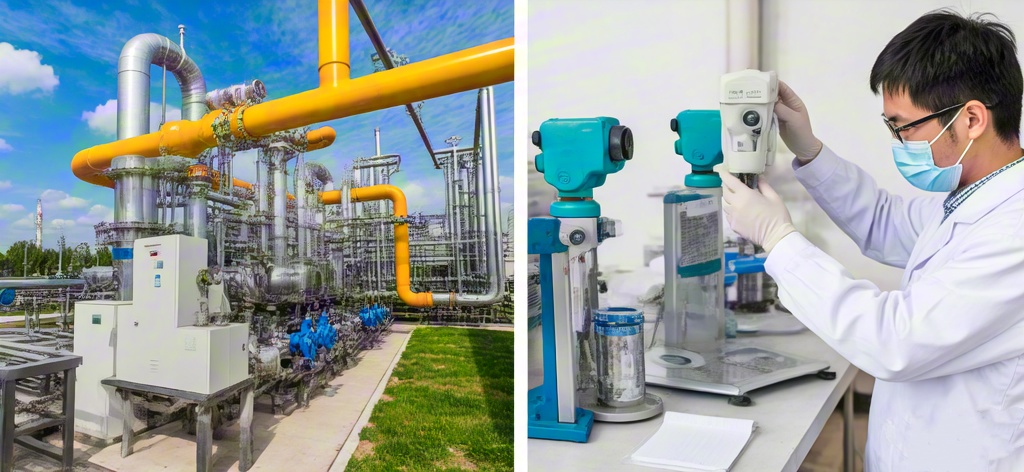
Different application scenarios have different requirements for the measurement range of TOC. Generally, the organic carbon content in natural water bodies in environmental monitoring is relatively low, possibly in the ppm (parts per million) range; while in industrial wastewater, the organic carbon content may be higher, even reaching above ppb (parts per billion). Therefore, when selecting a TOC Sensor, it is necessary to determine an appropriate measurement range according to the actual measurement needs. If the measurement range is too small, it may lead to inaccurate measurements of high-concentration samples; if the measurement range is too large, it may affect the sensor's precision and sensitivity.
?
In some special application scenarios, such as deep-sea monitoring and high-temperature and high-pressure industrial production processes, the sensor's temperature and pressure tolerance capabilities are highly required. It is necessary to select a sensor that can work normally under extreme temperature and pressure conditions to ensure the accuracy of the detection results.
If there are strong acids, strong bases, organic solvents, and other chemical substances in the detection environment, the sensor's corrosion resistance becomes crucial. A sensor made of corrosion-resistant materials should be selected to extend its service life and ensure measurement accuracy.
In some industrial environments, there may be strong electromagnetic interference. To ensure the normal operation of the sensor, it is necessary to select a sensor with good anti-electromagnetic interference capability to avoid deviations in the measurement data caused by electromagnetic interference.
?
Precision and accuracy are important indicators for measuring the performance of a TOC Sensor. Precision reflects the repeatability of the sensor's measurement results, while accuracy indicates how close the measurement results are to the true values. When selecting a sensor, an appropriate product with the required precision and accuracy should be chosen according to the actual needs. Generally, for application scenarios with high requirements for measurement results, sensors with high precision and accuracy should be selected.
Response time refers to the time required for the sensor to output stable measurement results from the moment it comes into contact with the sample. In scenarios that require real-time monitoring, such as industrial process control, the sensor's response time should be as short as possible to facilitate timely problem detection and adjustment.
The stability of a sensor refers to its ability to maintain consistent performance over a long period of use. A sensor with good stability can reduce the frequency of calibration and maintenance, lowering usage costs. When selecting a sensor, its stability can be evaluated by reviewing long-term stability test reports or user reviews.
?
Cost is an important factor to consider when selecting a TOC Sensor. The cost of a sensor not only includes the purchase price but also the expenses for installation, commissioning, maintenance, and calibration. When selecting a sensor, a cost-effective product should be chosen based on the budget and actual needs.
Good after-sales service can ensure that problems encountered during the use of the sensor can be resolved in a timely manner. When selecting a sensor supplier, it is necessary to understand its after-sales service system, including technical support, repair and maintenance, calibration services, etc. Choosing a supplier with a comprehensive after-sales service can provide users with a better user experience.
?
Among the numerous TOC Sensor products, Daruifuno's sensors stand out with their excellent performance and reliable quality. It is worth mentioning that Daruifuno not only provides professional TOC Sensors but also has outstanding COD Sensors with the powerful function of multi-parameter measurement, capable of simultaneously measuring multiple parameters such as BOD (Biochemical Oxygen Demand), COD (Chemical Oxygen Demand), and TOC.
Daruifuno's COD Sensors adopt advanced detection technology and high-quality materials, featuring high precision, high stability, and fast response. Whether in environmental monitoring, industrial process control, or laboratory research, they can meet the diverse needs of users. Its unique multi-parameter measurement function provides users with a more convenient and efficient detection solution, saving equipment procurement costs and usage space.
If you are looking for a suitable TOC Sensor or COD Sensor, welcome to visit our official website. Browse through the TOC Sensor or COD Sensor categories to find more products that meet your needs. Our professional team will be happy to provide you with detailed product information and excellent technical support to help you choose the most suitable sensor and safeguard your detection work.

September 25, 2024
August 27, 2024

November 07, 2023

October 20, 2023
In the field of water quality monitoring and analysis, Daruifuno's water quality instrument development team has stringent requirements on the performance of sensors, especially for waterproof...
Overview As a high-precision water quality monitoring device, the signal detection process of fluorescent dissolved oxygen sensor involves knowledge and technology in multiple fields such as optics,...
Introduction to Electrode Glass Membrane The electrode glass membrane, a critical component in pH electrodes, possesses a series of unique properties that make it suitable for use in harsh...
Overview Water quality is a critical factor in environmental protection, industrial processes, and public health. Effective monitoring and control help maintain safe drinking water, optimize...
Email to this supplier
September 25, 2024
August 27, 2024
November 07, 2023
October 20, 2023
About Us
Related Products List
Contact Us

Send Inquiry
Privacy statement: Your privacy is very important to Us. Our company promises not to disclose your personal information to any external company with out your explicit permission.
Fill in more information so that we can get in touch with you faster
Privacy statement: Your privacy is very important to Us. Our company promises not to disclose your personal information to any external company with out your explicit permission.