

Send Message
Privacy statement: Your privacy is very important to Us. Our company promises not to disclose your personal information to any external company with out your explicit permission.
 Suzhou Delfino Environmental Technology Co., Ltd.
Select Language
English
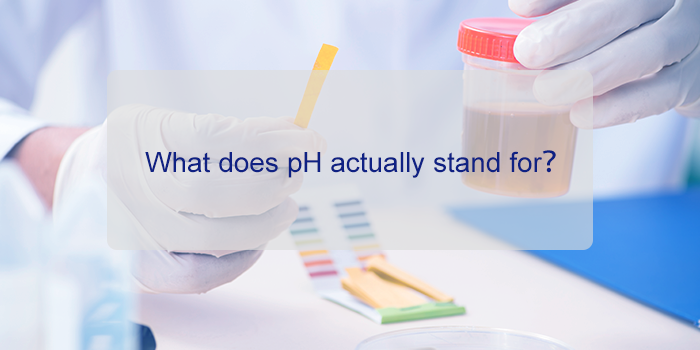
What is pH and what does pH actually stand for?
pH, also known as hydrogen ion concentraction index and pH value, is a scale of hydrogen ion activity in a solution and a measure of the acidity and alkalinity of the solution. The pH value actually stand for the concentraction of hydrogen ions. The concept of pH was first proposed by Danish biochemist S?ren Peter Lauritz S?rensen in 1909. p stands for the German potenz, meaning force or concentration, and H (hydrogen ion) stands for hydrogen ion (H). Under normal circumstances (25°C), the closer the pH value is to 0, the more acidic the solution is, and the closer the pH value is to 14, the more alkaline the solution is. When pH<7, the solution is acidic. When pH>7, the solution is alkaline. When pH=7, the solution is neutral.
In the calculation of pH value, [H] refers to the amount concentration of hydrogen ions in the solution. pH represents the concentration of hydrogen ions in the solution, and is used to determine the pH of the solution. However, in fact, the concentration of hydrogen ions in the solution cannot be measured, so the International Union of Pure and Applied Chemistry operationally defines pH≈-lg[C(H+)/(mol/L)], and the reference pH standard value is specified in the table. Since pH is defined operationally, it is generally believed that pH has no units.
The development history of pH
Danish chemist S?rensen developed the use of pH to describe acidity at the Carlsberg Laboratory in Denmark in 1909, and established a standard pH value of 0~14 for acidity measurement. pH means acidity or alkalinity, and the pH scale is the negative logarithm to the base 10 of the concentration of positively charged hydrogen ions in a solution. In other words, pH actually represents the concentration of hydrogen ions. Because the concentration of hydrogen ions in a solution determines acidity or alkalinity, but hydrogen has a large range of changes, it is expressed using logarithms, with a coefficient of variation of 10 per unit. Since this scale is negative, the smaller the number, the higher the concentration. This means that a substance with a pH of 4 is 10 times more acidic than a substance with a pH of 5, and 100 times more acidic than a substance with a pH of 6. The pH scale, from 0 to 14, takes a complex chemical phenomenon and distills it into an easy-to-grasp indicator. The pH scale is S?rensen's most famous achievement and is still widely used in a variety of scientific fields: from designing batteries to diagnosing blood diseases. However, the earliest applications of pH were very inconvenient. Except for applications in the field of enzymology, the application of pH was almost ignored.
Later, Leonor Michaelis, the founder of enzyme kinetics, published a monograph "Die wasserl stoffionkonzetration", which helped convince biochemists and later chemists of the importance of pH in analytical research. Since then, pH measurement, especially in the life sciences, has become increasingly important.
But truly modern pH measurement was revolutionized by two major innovations. The first was the development of an advanced glass electrode capable of responding to hydrogen ions in 1930 by Duncan McInnes and Malcolm Dole before it became widely used.
If you are interested in pH measurement, our company provides a variety of online pH sensors that can accurately measure the pH value of a solution. Delfino company focuses on the R&D and production of water quality analysis instruments. Our measurement parameters include pH, ORP, conductivity, TDS, salinity, dissolved oxygen, COD, ammonia nitrogen, turbidity, chlorophyll, blue-green algae, residual chlorine, and chlorine dioxide. wait. Our main products include pH ORP analyzer, conductivity analyzer, turbidity analyzer, COD analyzer, dissolved oxygen analyzer, ammonium analyzer, chlorine analyzer, etc.
September 25, 2024
August 27, 2024

November 07, 2023
October 20, 2023
In the field of water quality monitoring and analysis, Daruifuno's water quality instrument development team has stringent requirements on the performance of sensors, especially for waterproof...
Overview As a high-precision water quality monitoring device, the signal detection process of fluorescent dissolved oxygen sensor involves knowledge and technology in multiple fields such as optics,...
Introduction to Electrode Glass Membrane The electrode glass membrane, a critical component in pH electrodes, possesses a series of unique properties that make it suitable for use in harsh...
Overview Water quality is a critical factor in environmental protection, industrial processes, and public health. Effective monitoring and control help maintain safe drinking water, optimize...
Email to this supplier
September 25, 2024
August 27, 2024
November 07, 2023
October 20, 2023
About Us
Related Products List
Contact Us

Send Inquiry
Privacy statement: Your privacy is very important to Us. Our company promises not to disclose your personal information to any external company with out your explicit permission.
Fill in more information so that we can get in touch with you faster
Privacy statement: Your privacy is very important to Us. Our company promises not to disclose your personal information to any external company with out your explicit permission.