

Send Message
Privacy statement: Your privacy is very important to Us. Our company promises not to disclose your personal information to any external company with out your explicit permission.
 Shenzhen DOSZ Technology Co., Ltd.
Select Language
English
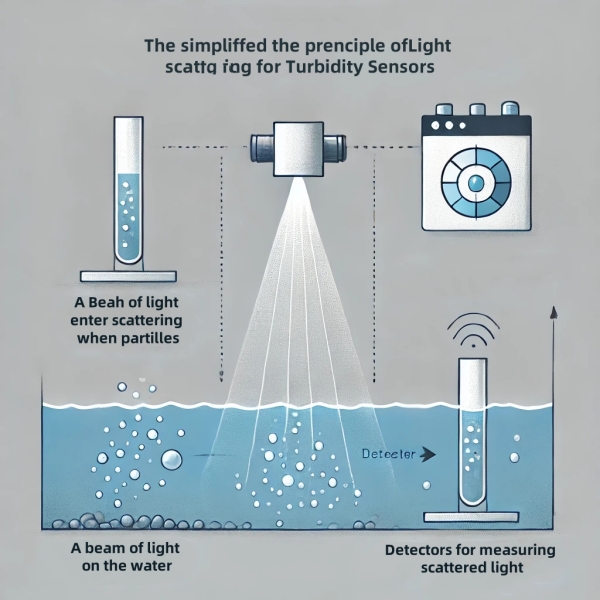
A turbidity sensor, also referred to as a Turbidity Probe, is not just a device for measuring water clarity. Modern turbidity sensors are equipped with cutting-edge optical technology, including infrared beams and multiple light scatter detection angles, enabling them to deliver precise measurements even in challenging conditions.
?
Turbidity sensors are invaluable across a variety of industries. Here are some unique applications:
The integration of turbidity sensors in systems like water treatment plants has revolutionized efficiency. By continuously monitoring water quality, operators can identify contamination quickly, reducing downtime and maintenance costs. Additionally, advanced sensors now offer remote monitoring capabilities, making them more versatile in industrial setups.
?
As industries demand more robust and versatile tools, turbidity sensors are evolving to meet these needs. Key trends include:

September 25, 2024

August 27, 2024

November 07, 2023

October 20, 2023
In the field of water quality monitoring and analysis, DOSZ's water quality instrument development team has stringent requirements on the performance of sensors, especially for waterproof...
Overview As a high-precision water quality monitoring device, the signal detection process of fluorescent dissolved oxygen sensor involves knowledge and technology in multiple fields such as optics,...
Introduction to Electrode Glass Membrane The electrode glass membrane, a critical component in pH electrodes, possesses a series of unique properties that make it suitable for use in harsh...
Overview Water quality is a critical factor in environmental protection, industrial processes, and public health. Effective monitoring and control help maintain safe drinking water, optimize...
Email to this supplier
September 25, 2024
August 27, 2024
November 07, 2023
October 20, 2023
About Us
Related Products List
Contact Us

Send Inquiry
Privacy statement: Your privacy is very important to Us. Our company promises not to disclose your personal information to any external company with out your explicit permission.
Fill in more information so that we can get in touch with you faster
Privacy statement: Your privacy is very important to Us. Our company promises not to disclose your personal information to any external company with out your explicit permission.