

Send Message
Privacy statement: Your privacy is very important to Us. Our company promises not to disclose your personal information to any external company with out your explicit permission.
 Suzhou Delfino Environmental Technology Co., Ltd.
Select Language
English
Activated sludge concentration refers to the suspended solids content of the mixed liquid at the outlet of the aeration tank, represented by the symbol MLSS, and its unit is mg/L. It is used to measure the amount of activated sludge in the aeration tank. The total amount of MLSS includes the following four aspects: active microorganisms, organic matter adsorbed on activated sludge that cannot be biodegraded; residues of microbial self-oxidation; and inorganic matter. So how to monitor the sludge concentration value in water?
The composition of activated sludge
There are bacteria, fungi, protozoa and metazoa in activated sludge. Among them, aerobic bacteria are the main ones that decompose organic matter.
The total number of bacteria in 1mL of aeration tank mixture is approximately 1*10^8 (billion)
Fungi are mainly filamentous molds, and fungi are not dominant in normal activated sludge. If filamentous bacteria grow significantly, the settling performance of activated sludge deteriorates.
Protozoa and bacteria play a role together in sewage purification. In 1 mL of normal activated sludge mixture, there are generally 5*10^3~2*10^4 protozoa surviving. 70% to 90% of them are ciliates. Protozoa promote the settling of bacteria and improve the sedimentation efficiency of bacteria. Protozoa feed on bacteria and can remove free bacteria.
Metazoa in activated sludge usually include rotifers and nematodes. These metazoans feed on bacteria, protozoa and activated sludge debris.
Activated sludge evaluation index:
The suspended solids concentration of the mixed liquid refers to the dry weight of suspended solids contained in the mixed liquid of 1L aeration tank. It is an indicator of the amount of activated sludge in the reactor. It includes microbial cells, microbial autogenous oxidation products, organic and inorganic substances adsorbed on the sludge floc and cannot be degraded by microorganisms. Because MLSS is more convenient to measure, it is often used as an indicator to estimate the number of microorganisms in activated sludge in engineering. When conducting engineering design, it is hoped to maintain a high MLSS to reduce the volume of the aeration tank and save land and investment. However, the MLSS concentration cannot be too high, otherwise it will lead to insufficient oxygen supply. Generally, the sludge concentration in the reactor is controlled at 2000~6000mg/L.
How to monitor sludge concentration in water quality?
Prepare filter paper, electronic analytical balance, oven, dryer, etc. Take 100mL of the mixture and filter it with filter paper. After the temperature in the oven rises to the set value between 103 and 105, put the dried filter paper into the oven for 2 hours, take it out and place it in a desiccator to cool for 2 hours and weigh it. After subtracting the weight of the filter paper, the value of MLSS sludge concentration can be obtained. This is a standard laboratory measurement method that can more accurately measure the value of sludge concentration.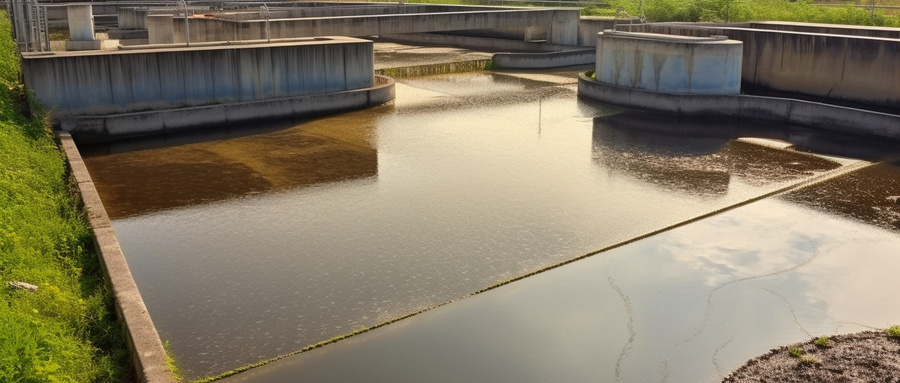
In sewage plants, it is often necessary to grasp the sludge concentration value of water quality in real time. At this time, an online sludge concentration sensor can be used. The MLSS300 series sludge concentration sensor developed and produced by daruifuno uses an optical method to continuously monitor the MLSS value of water quality. The sensor supports calibration, and the sensor can be calibrated based on the actual sludge concentration at the user's site.
Delfino focuses on the R&D and production of water quality analysis instruments. Our measurement parameters include pH, ORP, conductivity, TDS, salinity, dissolved oxygen, COD, ammonia nitrogen, turbidity, chlorophyll, blue-green algae, residual chlorine, and chlorine dioxide. wait. Our main products include pH ORP analyzer, conductivity analyzer, turbidity analyzer, COD analyzer, dissolved oxygen analyzer, ammonium analyzer, chlorine analyzer, etc. If you would like to know more, please contact us.

September 25, 2024
August 27, 2024

November 07, 2023

October 20, 2023
In the field of water quality monitoring and analysis, Daruifuno's water quality instrument development team has stringent requirements on the performance of sensors, especially for waterproof...
Overview As a high-precision water quality monitoring device, the signal detection process of fluorescent dissolved oxygen sensor involves knowledge and technology in multiple fields such as optics,...
Introduction to Electrode Glass Membrane The electrode glass membrane, a critical component in pH electrodes, possesses a series of unique properties that make it suitable for use in harsh...
Overview Water quality is a critical factor in environmental protection, industrial processes, and public health. Effective monitoring and control help maintain safe drinking water, optimize...
Email to this supplier
September 25, 2024
August 27, 2024
November 07, 2023
October 20, 2023
About Us
Related Products List
Contact Us

Send Inquiry
Privacy statement: Your privacy is very important to Us. Our company promises not to disclose your personal information to any external company with out your explicit permission.
Fill in more information so that we can get in touch with you faster
Privacy statement: Your privacy is very important to Us. Our company promises not to disclose your personal information to any external company with out your explicit permission.