Home> Company News> What is TDS? How to detect the TDS value of water?

What is TDS? How to detect the TDS value of water?

2024,03,20
TDS is the abbreviation of total dissolved solids, also known as total dissolved solids. The measurement unit is mg/L, which indicates how many milligrams of dissolved solids are dissolved in 1 liter of water. The higher the TDS value, the more dissolved substances the water contains. Total dissolved solids refers to the total amount of all solutes in water, including the content of both inorganic and organic matter. Generally, the conductivity value can be used to roughly understand the salt content in the solution. Generally speaking, the higher the conductivity, the higher the salt content, and the higher the TDS. Among inorganic substances, in addition to components dissolved into ionic forms, there may also be inorganic substances in molecular form. Since the organic matter and molecular inorganic matter contained in natural water can generally be ignored, the salt content is generally called total dissolved solids. However, TDS cannot effectively reflect water quality in specific water. How to monitor the TDS value in water? We usually use a TDS meter. If you want to monitor online, you can use a conductivity analyzer to monitor the TDS value at the same time. The unit of TDS is milligrams per liter, indicating how many milligrams of total dissolved solids are present in one liter of water. Sometimes, we also use ppm as the unit of TDS, which refers to the number of milliliters of solute contained in 1 million milliliters of solution or the number of grams of solute contained in 1 million grams of solution. The conversion relationship between them is 1mg/L=1ppm.Some drinking water hygiene standards stipulate that the TDS of drinking tap water should be less than or equal to 1000mg/L.
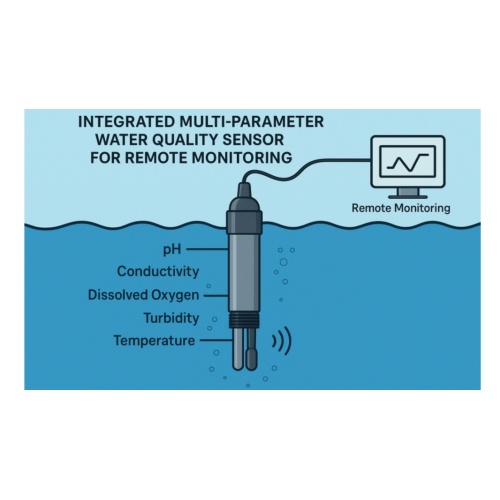
Common natural water TDS contents are: seawater 6000~50000ppm, brackish water 1000~1500ppm, brackish water 1500~6000ppm, fresh water less than 1000ppm, pure water 0~9ppm, mountain spring water 10~60ppm, and tap water 60~100ppm. The instruments that detect TDS on the market actually measure the conductivity of the aqueous solution first, and then convert the conductivity value into a TDS value. We use conductivity sensors to detect the total dissolved solids content in water within an acceptable error range. Usually the conversion factor between conductivity and TDS is 0.5. Daruifuno focuses on the R&D and production of water quality analysis instruments. Its main products include pH ORP analyzer, conductivity analyzer, turbidity analyzer, COD analyzer, dissolved oxygen analyzer, ammonium analyzer, chlorine analyzer, etc. In fact, the conductivity analyzer monitors the conductivity and TDS value of water quality. Unlike the pen-type TDS meter, what we do is online continuous monitoring.

However, it is worth noting that TDS can only detect conductive substances in water, but cannot detect bacteria, viruses and other substances. Relying solely on TDS testing to determine whether water quality is suitable for drinking raw is not the most correct approach. Bacteria or viruses that cannot be destroyed by high temperatures must be detected through more sophisticated instruments. Generally speaking, the larger the TDS value, the greater the impurity content in the water, the better the conductivity of the water, and the greater its conductivity value; conversely, the smaller the impurity content, the smaller the conductivity of the water, and its conductivity value. Also smaller. However, it does not mean that the smaller the TDS value, the more suitable it is for human consumption. Usually, the conductive substances are metallic elements, such as calcium, magnesium and other elements. If all these metal elements are removed, the water will be bad for human health. What we need is water that removes substances harmful to the human body and retains substances beneficial to the human body. The AEC1-T series of online conductivity analyzers developed and produced by Daruifuno can be used with conductivity sensors with different K constants to monitor the conductivity value of water in real time, and display TDS and salinity values by setting the conversion coefficient. If you are interested in our products, please contact us.
Contact Us

Author:

Ms. Selena

Phone/WhatsApp:

++86 18013144571

Popular Products
You may also like
Related Information
Daruifuno Sensor & Probe-Pressure and Waterproof Test

In the field of water quality monitoring and analysis, Daruifuno's water quality instrument development team has stringent requirements on the performance of sensors, especially for waterproof...

Signal detection and temperature compensation calibration of fluorescent dissolved oxygen sensor

Overview As a high-precision water quality monitoring device, the signal detection process of fluorescent dissolved oxygen sensor involves knowledge and technology in multiple fields such as optics,...

The Characteristics and Applications of Electrode Glass Membrane

Introduction to Electrode Glass Membrane The electrode glass membrane, a critical component in pH electrodes, possesses a series of unique properties that make it suitable for use in harsh...

Water Quality Monitoring and Control: Optimizing Water Treatment with Sensors

Overview Water quality is a critical factor in environmental protection, industrial processes, and public health. Effective monitoring and control help maintain safe drinking water, optimize...

Related Categories

Email to this supplier

Subject:
Email:
Message:

Your message must be between 20-8000 characters

We will contact you immediately

Fill in more information so that we can get in touch with you faster

Privacy statement: Your privacy is very important to Us. Our company promises not to disclose your personal information to any external company with out your explicit permission.

Send