

Send Message
Privacy statement: Your privacy is very important to Us. Our company promises not to disclose your personal information to any external company with out your explicit permission.
 Suzhou Delfino Environmental Technology Co., Ltd.
Select Language
English
?
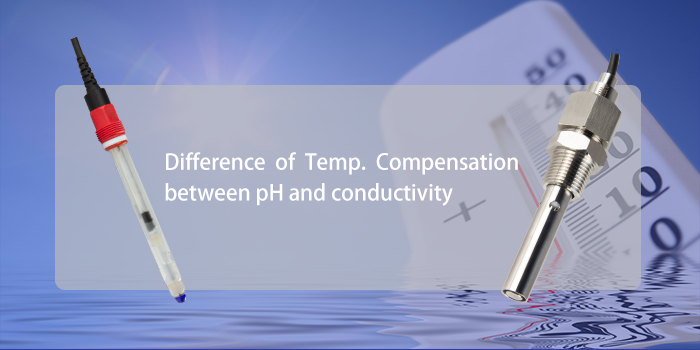
The conductivity is closely related to the degree of dissociation of the electrolyte in water and the migration speed of ions, and the degree of dissociation and migration speed are related to the temperature of the solution. As the temperature increases, the conductivity of the solution increases; on the contrary, the conductivity decreases. In order to overcome the influence of temperature and make the conductivity of different solutions at different temperatures comparable, when measuring conductivity, it is generally accepted that 25℃ is used as the reference temperature. When the solution temperature is not 25℃, temperature compensation is performed, and the compensation is conductivity at 25℃. If a conductivity meter without temperature compensation is used, the temperature of the solution and the conductivity or conductivity at that temperature are generally measured first, and the measured results are converted to the conductivity at 25℃. The AEC1 series conductivity controllers developed and produced by Daruifuno all have a temperature compensation function. The default temperature sensor is NTC10K or PT1000, which can perform temperature compensation in a timely manner.
The temperature compensation function of pH is mainly used to correct the deviation caused by the difference between the temperature of standard buffer and other standard samples during calibration and the temperature of the actual sample solution. When making pH value measurements with general accuracy, when the temperatures of the sample solution and the standard solution are different, temperature compensation can be used. When we use a pH electrode to measure pH value, there will be a certain temperature deviation. According to the Nernst equation, when pH drifts away from pH 7, there will be a deviation of about 0.03pH/°C. This deviation is related to temperature, and temperature compensation can be divided into automatic temperature compensation and manual temperature compensation. For example, daruifuno's APX series online pH ORP Controller also has a temperature compensation function. When using automatic temperature compensation, the instrument converts the conversion coefficient obtained by the electrode at the calibration temperature according to the Nernst formula to obtain the conversion coefficient at the actual temperature. This gives the pH value at the actual temperature. So this is different from temperature compensation of conductivity.
In addition to the temperature compensation function, the pH or Conductivity Controller developed and produced by Daruifuno also has 2 SPST relays, which can control dosing, etc. 2 channels of 4-20mA current output can output parameters such as main measurement value and temperature. Daruifuno focuses on the R&D and production of water quality analysis instruments. Its main products include pH ORP analyzer, conductivity analyzer, turbidity analyzer, COD analyzer, dissolved oxygen analyzer, ammonium analyzer, chlorine analyzer, etc. If you are interested in our products, please contact us.
September 25, 2024
August 27, 2024

November 07, 2023

October 20, 2023
In the field of water quality monitoring and analysis, Daruifuno's water quality instrument development team has stringent requirements on the performance of sensors, especially for waterproof...
Overview As a high-precision water quality monitoring device, the signal detection process of fluorescent dissolved oxygen sensor involves knowledge and technology in multiple fields such as optics,...
Introduction to Electrode Glass Membrane The electrode glass membrane, a critical component in pH electrodes, possesses a series of unique properties that make it suitable for use in harsh...
Overview Water quality is a critical factor in environmental protection, industrial processes, and public health. Effective monitoring and control help maintain safe drinking water, optimize...
Email to this supplier
September 25, 2024
August 27, 2024
November 07, 2023
October 20, 2023
About Us
Related Products List
Contact Us

Send Inquiry
Privacy statement: Your privacy is very important to Us. Our company promises not to disclose your personal information to any external company with out your explicit permission.
Fill in more information so that we can get in touch with you faster
Privacy statement: Your privacy is very important to Us. Our company promises not to disclose your personal information to any external company with out your explicit permission.