

Send Message
Privacy statement: Your privacy is very important to Us. Our company promises not to disclose your personal information to any external company with out your explicit permission.
 Suzhou Delfino Environmental Technology Co., Ltd.
Select Language
English
Most of the excess ammonia nitrogen in water bodies is related to human activities, such as wastewater generated from industrial production, agricultural activities, and sewage treatment. If the high concentration of ammonia nitrogen in these wastewater is not treated or there is a problem in the treatment process, it will cause serious consequences if it is directly discharged. Ammonia nitrogen in natural water bodies exceeds the standard. In addition, when a large amount of organic matter enters natural water bodies, it will also cause ammonia nitrogen to exceed the standard. It is very necessary to monitor the ammonia nitrogen value of natural water bodies and sewage discharged from industrial processes.
What are the dangers of excessive ammonia nitrogen in water?
1. Exceeding the standard of ammonia nitrogen in the water body will cause the dissolved oxygen value of the water body to be low, consuming a large amount of oxygen in the water body, causing the water to turn black and smelly, and the water quality to decline.
2. The nitrogen in the water exceeds the tolerance range of natural water bodies and will lead to eutrophication of water bodies.
3. Nitrite chlorine and nitrate nitrogen in the water will cause great harm to the human body and aquatic organisms. When the nitrite and ammonia in the water are too high, drinking this water will combine with protein to form nitrosamines, which is a strong carcinogen. Long-term drinking is extremely harmful to the body. Fish are also very sensitive to ammonia nitrogen in the water. When the ammonia nitrogen content is too high, it will cause the death of fish.
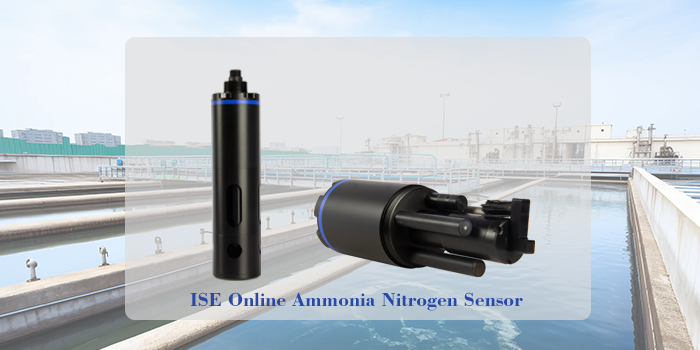
ISE ammonia nitrogen sensor measurement principle
The NH351 sensor developed and produced by Daruifuno uses ion selection method to measure ammonia nitrogen concentration. The ammonia nitrogen sensor consists of an ammonium ion selective electrode, a pH electrode, and a temperature electrode to form an integrated sensor. These parameters can mutually correct the measured value of ammonia nitrogen. The ammonia ion selective electrode directly monitors ammonium ions in the water environment and determines the concentration of ammonia nitrogen. Use a pH electrode as a reference electrode for better stability. The ammonium ion electrode only measures ammonium ions (NH4+) and not ammonia (NH3).
Features of NH351 ammonia nitrogen sensor
Ammonia nitrogen sensor is an electrochemical method using ion carriers.
The advantage of the ion selection method is that it reduces the size of the analysis equipment, is directly immersed in water, does not require sampling, and can compensate for multiple parameters, such as temperature, pH compensation, etc.
It has an automatic cleaning function to prevent microbial adhesion.
The probe integrates RS485 communication and supports modbus communication protocol. It can be integrated into the water quality monitoring system to obtain ammonia nitrogen data in real time.
Maintenance is simple and only requires regular calibration and cleaning.
Application of Ion Selective Ammonia Nitrogen Sensor
Paired with the DUC2-NH ammonia nitrogen controller, this ammonia nitrogen analyzer can be widely used in water quality analysis in municipal and industrial sewage, municipal tap water, surface water, groundwater and other fields.
Note: Ion electrodes are only suitable for freshwater applications, not for seawater
Common treatment methods for excessive ammonia nitrogen
1. Aeration method: Ammonia nitrogen removal is achieved by increasing the oxygen content in the water body. Ammonia nitrogen can be oxidized to nitrate nitrogen and nitrite nitrogen under high oxidation conditions. Generally, wastewater that exceeds the standard is sent into a large aeration tank, and then a large amount of air is transported into the water to increase the oxygen content. This stimulates the metabolism of microorganisms in the wastewater and accelerates the oxidation reaction of ammonia nitrogen in the wastewater.
2. Biological treatment method: a method that uses microorganisms to treat organic matter and ammonia nitrogen in wastewater. Ammonia nitrogen is converted into nitrate nitrogen and nitrite nitrogen through a series of microbial reactions. Let the wastewater enter the bioreactor, which contains various types of microorganisms, and then use ammonia nitrogen as a raw material for the growth and reproduction of microorganisms. This method takes a long time to process, but the ammonia nitrogen removal rate can reach more than 90%.
3. Chemical treatment method: A method of converting ammonia nitrogen into harmless nitrogen by adding chemicals to wastewater. Commonly used chemicals include ferric chloride, ferric sulfate, sodium hypochlorite, etc. This method is fast and effective, but it is necessary to pay attention to the type and dosage of chemicals to avoid secondary pollution.
Delfino company focuses on the R&D and production of water quality analysis instruments. Our main products include pH ORP analyzer, conductivity analyzer, turbidity analyzer, COD analyzer, dissolved oxygen analyzer, ammonium analyzer, chlorine analyzer, etc.
September 25, 2024
August 27, 2024

November 07, 2023
October 20, 2023
In the field of water quality monitoring and analysis, Daruifuno's water quality instrument development team has stringent requirements on the performance of sensors, especially for waterproof...
Overview As a high-precision water quality monitoring device, the signal detection process of fluorescent dissolved oxygen sensor involves knowledge and technology in multiple fields such as optics,...
Introduction to Electrode Glass Membrane The electrode glass membrane, a critical component in pH electrodes, possesses a series of unique properties that make it suitable for use in harsh...
Overview Water quality is a critical factor in environmental protection, industrial processes, and public health. Effective monitoring and control help maintain safe drinking water, optimize...
Email to this supplier
September 25, 2024
August 27, 2024
November 07, 2023
October 20, 2023
About Us
Related Products List
Contact Us

Send Inquiry
Privacy statement: Your privacy is very important to Us. Our company promises not to disclose your personal information to any external company with out your explicit permission.
Fill in more information so that we can get in touch with you faster
Privacy statement: Your privacy is very important to Us. Our company promises not to disclose your personal information to any external company with out your explicit permission.