

Send Message
Privacy statement: Your privacy is very important to Us. Our company promises not to disclose your personal information to any external company with out your explicit permission.
 Suzhou Delfino Environmental Technology Co., Ltd.
Select Language
English
The working principle of the residual chlorine sensor is based on an electrochemical reaction when an electric current is passed through an electrolyte. The oxidant in the electrolyte will be reduced and a corresponding electrical signal will be generated. The residual chlorine sensor determines the concentration of oxidants in the water sample by measuring the intensity of the electrical signal, thereby inferring the content of residual chlorine in the water body.
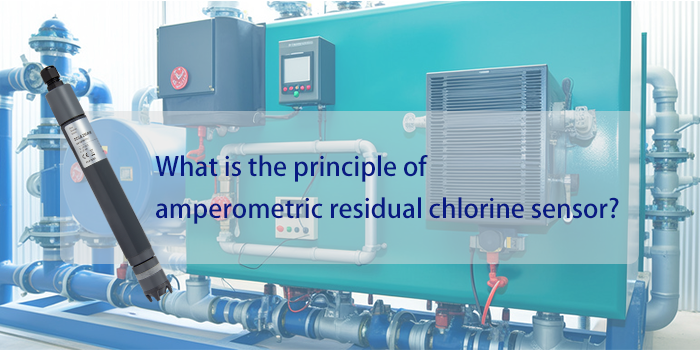
Daruifuno's residual chlorine sensor adopts the film-coated ampere method, and the sensor measurement is stable and accurate. The residual chlorine factor enters the sensor through the selective permeability membrane, and an oxidation-reduction reaction occurs on the surface of the gold electrode, generating a weak current. The signal value obtained after processing is proportional to the residual chlorine or total chlorine concentration. After calculation, the residual chlorine can be obtained or total chlorine concentration. The selectively permeable membrane and electrolyte determine the selectively passed factor components, thereby reducing the influence of pH on the sensor. Residual chlorine sensors are widely used in tap water, secondary water supply, municipal pipe networks, sewage treatment and other fields to provide reliable data for monitoring residual chlorine.
Delfino company focuses on the R&D and production of water quality analysis instruments. Our measurement parameters include pH, ORP, conductivity, TDS, salinity, dissolved oxygen, COD, ammonia nitrogen, turbidity, chlorophyll, blue-green algae, residual chlorine, and chlorine dioxide. wait. Our main products include pH ORP analyzer, conductivity analyzer, turbidity analyzer, COD analyzer, dissolved oxygen analyzer, ammonium analyzer, chlorine analyzer, etc. If you would like to know more about the chlorine sensor, please contact us.

September 25, 2024
August 27, 2024

November 07, 2023

October 20, 2023
In the field of water quality monitoring and analysis, Daruifuno's water quality instrument development team has stringent requirements on the performance of sensors, especially for waterproof...
Overview As a high-precision water quality monitoring device, the signal detection process of fluorescent dissolved oxygen sensor involves knowledge and technology in multiple fields such as optics,...
Introduction to Electrode Glass Membrane The electrode glass membrane, a critical component in pH electrodes, possesses a series of unique properties that make it suitable for use in harsh...
Overview Water quality is a critical factor in environmental protection, industrial processes, and public health. Effective monitoring and control help maintain safe drinking water, optimize...
Email to this supplier
September 25, 2024
August 27, 2024
November 07, 2023
October 20, 2023
About Us
Related Products List
Contact Us

Send Inquiry
Privacy statement: Your privacy is very important to Us. Our company promises not to disclose your personal information to any external company with out your explicit permission.
Fill in more information so that we can get in touch with you faster
Privacy statement: Your privacy is very important to Us. Our company promises not to disclose your personal information to any external company with out your explicit permission.