

Send Message
Privacy statement: Your privacy is very important to Us. Our company promises not to disclose your personal information to any external company with out your explicit permission.
 Suzhou Delfino Environmental Technology Co., Ltd.
Select Language
English
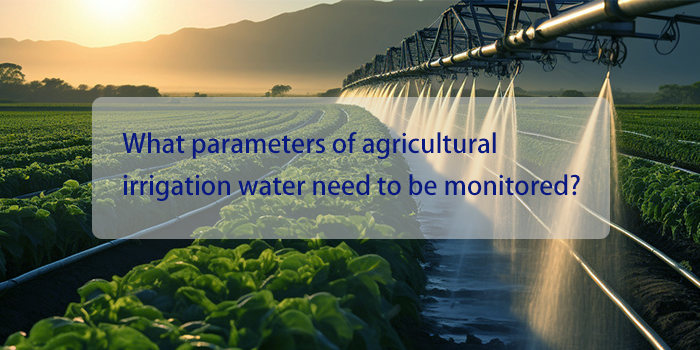
Water resources are very precious, and agriculture is an important industry for the development of a country. Water has a very important impact on the quality and products of grain, cotton and vegetables. If sewage is used for irrigation, the quality of agriculture products will decrease, they will become perishable and difficult to store, and toxic substances in the crops will increase, which will cause harm to human body. Therefore, monitoring agriculture irrigation water can promote the recycling of water resources, reduce the cost of sewage treatment, and also provide scientific guarantee for the safety of farmland soil, groundwater and agriculture products. So what parameters of agriculture irrigation water need to be monitored?
pH value
Long-term irrigation of crops with water with a pH value lower than 5.5 will inhibit nitrifying bacteria in the soil, weaken the fertilizer efficiency of phosphate, and easily cause salts such as calcium and magnesium to be leached. Under acidic conditions, the solubility heav metal poisons in the soil will increase, making them easily absorbed by crops and causing damage. If water with a pH value greater than 8 is irrigated for a ling time, the nitrogen fertilizer will be easily ammoniated, and the sodium ions in the soil will become active, which will inhibit the crop roots. Usually, the pH limit of agriculture irrigation water is 5.5~8.5pH.
Water temperature
The temperature of irrigation water directly affects the temperature of the soil. According to rice growth and development is 28~32℃. When the water temperature is higher than 40℃, it will cause harm to rice. The maximum tolerated water temperature is 40~42℃.
Suspended solids
Suspended solids consist of two major categories: organic matter and mineral matter. The proportions of these two types of substances in sewage are different, and their impact on the agriculture environmental is also different. Generally, the suspended solids limit for agricultural irrigation water is 100mg/L for irrigation water for dryland cereals and oil crops, the suspended solids limit for water cereal crops is 80mg/L, and the suspended solids limit for water ccereal crops is 80mg/L, and the suspended solids limit for land vegetables is 60mg/L. The limit for vegetables which can be eaten raw is 15mg/L.
Chemical oxygen demand(CODcr)
Organic matter in irrigation water is a potential source of organic matter in the soil, which can effectively improve the physical and chemical properties of the soil, mature the soil, and enhance soil fertility. However, considering that its organic matter composition is complex and has potential harm to crops, agricultural product quality and the environment, it is necessary to appropriately control the CODcr index in farmland irrigation water. In China, the COD limits for agricultural irrigation water are: 200mg/L for dry crops, 150mg/L for water crops, and 100mg/L for vegetables.
Chloride
According to the irrigation water quality standard of the Food and agriculture organization of the united nations "Agriculture Water Standards", chloride (Cl) for surface irrigation is less than 142mg/L; [Canadian Guidelines for Protecting Agricultural Water Quality" for irrigation water quality-sensitive crops requires chloride to be less than 100mg/L, of which tolerant crops are less than 700mg/L. In addition to the above common water quality parameters, agricultural irrigation water must also be monitored for anionic surfactants, total salt content, sulfide, total lead, total cadmium, total salt content, sulfide, total lead, total cadmium, chromium, total mercury, total arsenic, fecal coliform bacteria, roundworms Egg count, president, total zinc, selenium, cyanide, pertroleum, volatile phenol, benzene, boron, etc.
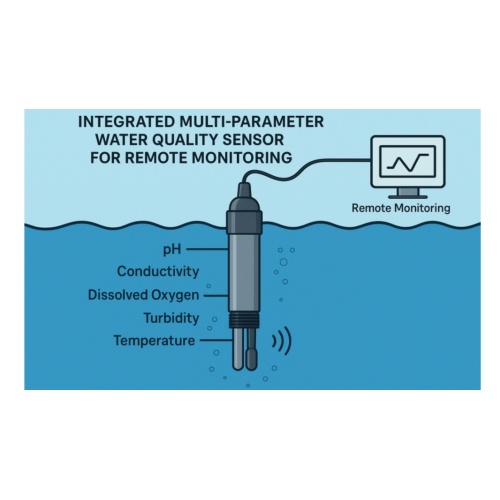
For the above agricultural irrigation water quality parameters, we provide matching sensors. Delfino company focuses on the R&D and production of water quality analysis instruments. Our measurement parameters include pH, ORP, conductivity, TDS, salinity, dissolved oxygen, COD, ammonia nitrogen, turbidity, chlorophyll, blue-green algae, residual chlorine, and chlorine dioxide. wait. Our main products include pH ORP analyzer, conductivity analyzer, turbidity analyzer, COD analyzer, dissolved oxygen analyzer, ammonium analyzer, chlorine analyzer, etc. If you would like to know more, please contact us.
September 25, 2024
August 27, 2024
November 07, 2023
October 20, 2023
In the field of water quality monitoring and analysis, Daruifuno's water quality instrument development team has stringent requirements on the performance of sensors, especially for waterproof...
Overview As a high-precision water quality monitoring device, the signal detection process of fluorescent dissolved oxygen sensor involves knowledge and technology in multiple fields such as optics,...
Introduction to Electrode Glass Membrane The electrode glass membrane, a critical component in pH electrodes, possesses a series of unique properties that make it suitable for use in harsh...
Overview Water quality is a critical factor in environmental protection, industrial processes, and public health. Effective monitoring and control help maintain safe drinking water, optimize...
Email to this supplier
September 25, 2024
August 27, 2024
November 07, 2023
October 20, 2023
About Us
Related Products List
Contact Us

Send Inquiry
Privacy statement: Your privacy is very important to Us. Our company promises not to disclose your personal information to any external company with out your explicit permission.
Fill in more information so that we can get in touch with you faster
Privacy statement: Your privacy is very important to Us. Our company promises not to disclose your personal information to any external company with out your explicit permission.