Home> Industry News> Top 5 Challenges in Dissolved Oxygen Measurement and How to Solve Them

Top 5 Challenges in Dissolved Oxygen Measurement and How to Solve Them

2025,05,28

Overview

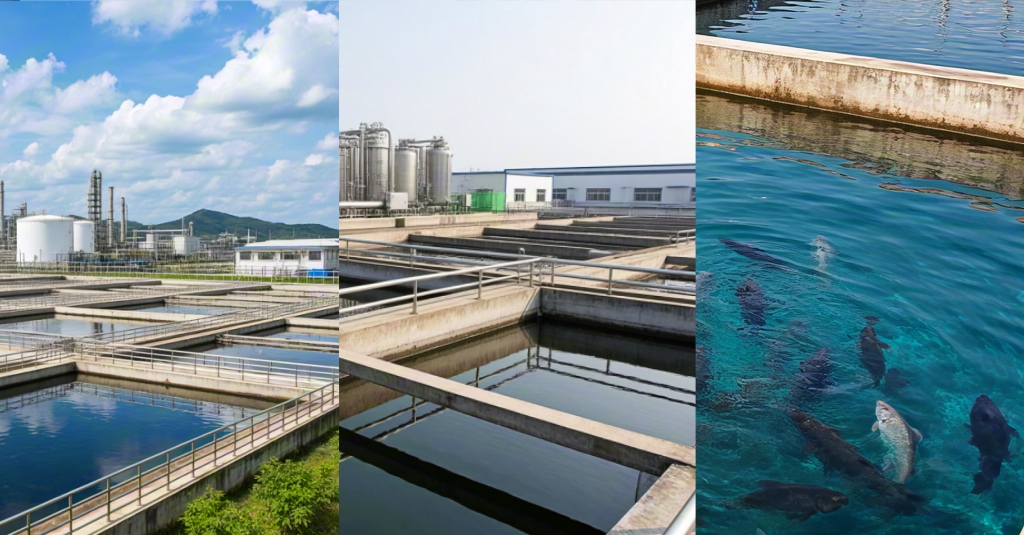
Dissolved oxygen (DO), as a core indicator of water self-purification capacity and biological activity, plays an irreplaceable role in sewage treatment, aquaculture and industrial water treatment. However, its measurement process is affected by environmental interference, technical limitations and operational complexity, resulting in challenges in the accuracy of measurement results. Combining industry practices and technological advances, this article analyzes the five core challenges of dissolved oxygen measurement and proposes solutions, and recommends the use of Daruifuno high-precision dissolved oxygen sensors to optimize the measurement process.
sewage treatment,aquaculture and industrial w
?

Core Challenges and Solutions

1. Environmental Interference and Dynamic Balance

The dissolved oxygen content in water is significantly affected by water temperature, oxygen partial pressure and salinity. The dissolved oxygen saturation is higher at low temperatures, while increased salt content reduces the saturation. For example, the dissolved oxygen saturation of seawater is significantly lower than that of fresh water.
Solution: Use sensors with built-in temperature compensation and pressure sensors to calibrate environmental parameters in real time. The Daruifuno OPD790 sensor has a built-in temperature compensation unit that can automatically correct environmental fluctuation errors to ensure measurement accuracy.
?

2. Photosynthesis interference and measurement error

Algae and other aquatic plants release oxygen during photosynthesis, which may cause abnormal increase in dissolved oxygen saturation in water. The traditional iodine method has large errors in this scenario.
Solution: Use non-consumable measurement technology. Daruifuno sensor adopts the principle of fluorescence quenching, without chemical reagents, and quickly obtains dissolved oxygen concentration by exciting fluorescent substances with blue light and detecting red light phase difference to avoid photosynthesis interference.
?

3. Sensor maintenance cost and response time

Traditional electrochemical sensors need to replace filling liquid and membrane cap regularly, which has high maintenance cost and long response time. For example, the membrane cap needs to be replaced every 1-2 months in turbid water environment and every 4-5 months in clear water environment.
Solution: Adopt modular design and long-life membrane cap. The life of Daruifuno sensor membrane cap is up to 1 year, and the filling liquid replacement cycle is extended to 3 months. It supports plug-and-play and reduces maintenance frequency and cost.
?

4. Measurement accuracy under complex water conditions

Water with high turbidity, high salinity or oxidizing substances may interfere with sensor readings. For example, the adsorption of iodine by suspended matter leads to errors in iodometric measurement, and nitrite or free chlorine requires pretreatment.
Solution: Choose sensors with strong anti-interference ability and no need for pretreatment. Daruifuno sensors use optical measurement technology, and color and turbidity do not affect the results. They also have built-in digital interfaces (RS485/Modbus), which are compatible with industrial control systems and transmit data in real time.
?

5. Real-time monitoring and data transmission requirements

Traditional measurement methods require on-site sampling and cannot meet the needs of continuous monitoring. Although IoT technology can transmit data remotely, device compatibility and stability are key.
Solution: Deploy smart sensors that support IoT. Daruifuno sensors have an IP68 protection rating, support long-term underwater use, built-in storage and offline calibration functions, are compatible with DTUs and portable devices, and achieve real-time monitoring and data transmission.
?

Daruifuno Dissolved Oxygen Sensor recommendation

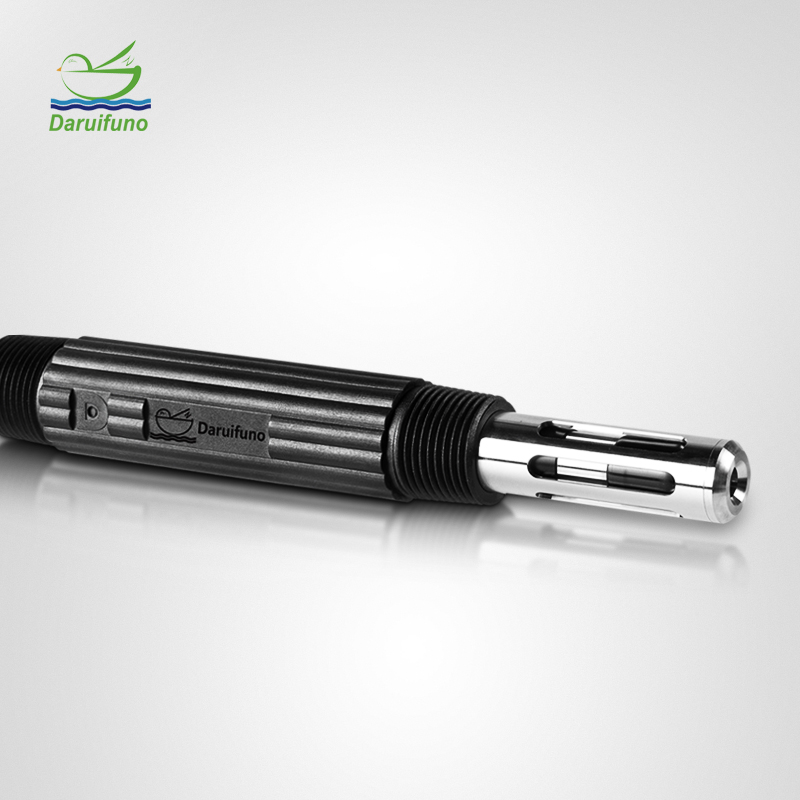
Daruifuno OPD790 DO Sensor adopts fluorescence quenching technology and has the following advantages:
?
High precision: measurement range 0-20mg/L, accuracy ±0.1mg/L, response time T90<30s;
Maintenance-free: membrane cap life 1 year, filling liquid replacement cycle 3 months, plug and play support;
Anti-interference: chromaticity and turbidity do not affect the results, built-in temperature compensation and pressure compensation;
Smart connection: RS485 interface, support Modbus protocol, compatible with industrial control systems.
DO sensor-OPD790
This sensor is suitable for sewage treatment, aquaculture, environmental monitoring and industrial water treatment scenarios, can operate stably for a long time, and reduce maintenance costs.
?

Product classification and browsing guide

For more information about Daruifuno dissolved oxygen sensor series, please visit our Dissolved Oxygen Sensor classification page. This category provides a variety of models and specifications, covering laboratory, field and industrial application scenarios, and supports customized needs. Our technical team can provide selection suggestions and solutions to ensure that you choose the most suitable product.
?
By optimizing measurement technology and equipment, Daruifuno is committed to providing industry users with efficient and accurate dissolved oxygen monitoring solutions to assist in water environment management and industrial process optimization.
Contact Us

Author:

Ms. Selena

Phone/WhatsApp:

++86 18013144571

Popular Products
You may also like
Related Information
Daruifuno Sensor & Probe-Pressure and Waterproof Test

In the field of water quality monitoring and analysis, Daruifuno's water quality instrument development team has stringent requirements on the performance of sensors, especially for waterproof...

Signal detection and temperature compensation calibration of fluorescent dissolved oxygen sensor

Overview As a high-precision water quality monitoring device, the signal detection process of fluorescent dissolved oxygen sensor involves knowledge and technology in multiple fields such as optics,...

The Characteristics and Applications of Electrode Glass Membrane

Introduction to Electrode Glass Membrane The electrode glass membrane, a critical component in pH electrodes, possesses a series of unique properties that make it suitable for use in harsh...

Water Quality Monitoring and Control: Optimizing Water Treatment with Sensors

Overview Water quality is a critical factor in environmental protection, industrial processes, and public health. Effective monitoring and control help maintain safe drinking water, optimize...

Related Categories

Email to this supplier

Subject:
Email:
Message:

Your message must be between 20-8000 characters

We will contact you immediately

Fill in more information so that we can get in touch with you faster

Privacy statement: Your privacy is very important to Us. Our company promises not to disclose your personal information to any external company with out your explicit permission.

Send