

Send Message
Privacy statement: Your privacy is very important to Us. Our company promises not to disclose your personal information to any external company with out your explicit permission.
 Suzhou Delfino Environmental Technology Co., Ltd.
Select Language
English
Water quality is a critical concern for industries, ecosystems, and human health. In this article, we’ll explore how suspended solids and turbidity impact water clarity and quality. You’ll also learn about advanced solutions like the OPTU850 Turbidity Sensor that help monitor and manage these factors effectively.

Suspended solids are microscopic or visible particles that remain undissolved in water and move with its flow. These particles can originate from:
Common examples include silt, organic debris, algae, and microorganisms. Even tiny amounts of suspended solids can significantly impact water clarity and quality.
Turbidity measures how much suspended particles scatter and absorb light in water. It’s a key indicator of water clarity:
For instance, the World Health Organization (WHO) recommends turbidity levels below 1 NTU for drinking water to minimize health risks.
The relationship is simple: more suspended solids = higher turbidity. Imagine adding silt to a glass of water—as the silt increases, the water becomes cloudier, and light penetration decreases. This illustrates how turbidity directly reflects suspended solids concentration.

High turbidity affects water in multiple ways:
For example, a study by the EPA found that turbidity levels above 10 NTU in rivers can reduce oxygen levels by up to 30%, threatening fish populations.
Effective turbidity control requires a multi-pronged approach:
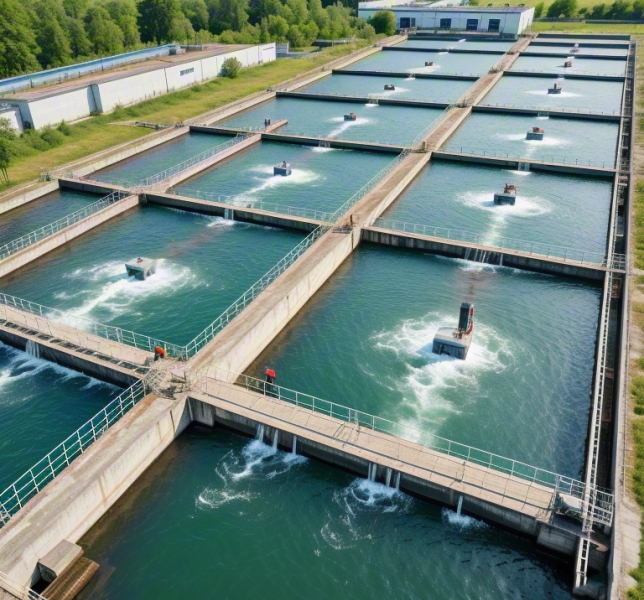
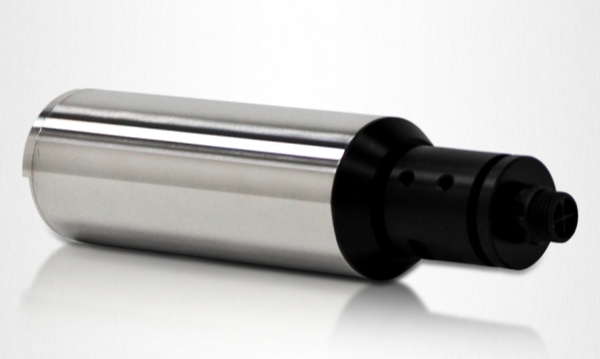
The OPTU850 is a state-of-the-art sensor designed for industrial, environmental, and aquaculture applications. Key features include:
Applications:
Pro Tip: Pair the OPTU850 with our cloud-based monitoring platform for real-time alerts and historical data analysis!
Understanding suspended solids and turbidity is vital for protecting water resources. By leveraging advanced sensors like the OPTU850 and adopting sustainable practices, we can ensure clean, safe water for communities, industries, and ecosystems.
Ready to elevate your water quality monitoring? Contact us today to learn how the OPTU850 can transform your operations!
September 25, 2024
August 27, 2024

November 07, 2023
October 20, 2023
In the field of water quality monitoring and analysis, Daruifuno's water quality instrument development team has stringent requirements on the performance of sensors, especially for waterproof...
Overview As a high-precision water quality monitoring device, the signal detection process of fluorescent dissolved oxygen sensor involves knowledge and technology in multiple fields such as optics,...
Introduction to Electrode Glass Membrane The electrode glass membrane, a critical component in pH electrodes, possesses a series of unique properties that make it suitable for use in harsh...
Overview Water quality is a critical factor in environmental protection, industrial processes, and public health. Effective monitoring and control help maintain safe drinking water, optimize...
Email to this supplier
September 25, 2024
August 27, 2024
November 07, 2023
October 20, 2023
About Us
Related Products List
Contact Us

Send Inquiry
Privacy statement: Your privacy is very important to Us. Our company promises not to disclose your personal information to any external company with out your explicit permission.
Fill in more information so that we can get in touch with you faster
Privacy statement: Your privacy is very important to Us. Our company promises not to disclose your personal information to any external company with out your explicit permission.