

Send Message
Privacy statement: Your privacy is very important to Us. Our company promises not to disclose your personal information to any external company with out your explicit permission.
 Suzhou Delfino Environmental Technology Co., Ltd.
Select Language
English
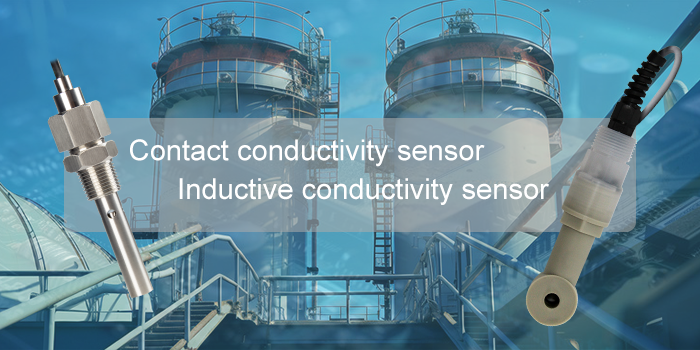
There are two basic types of conductivity, including contact conductivity and toroidal conductivity. The main difference between these two types of conductivity design is how the sensor is built. Because the two sensors are constructed differently, each is suitable for different applications. Which sensor to use depends on the conductivity of the water, the concentration of dissolved solids in the water, and the corrosive nature of the water. Toroidal conductivity sensors are the best choice for measuring water containing large amounts of contaminants. If the water is corrosive and has a high concentration of dissolved solids, it is best to use a toroidal Conductivity Sensor.
?
1. what is a contact conductivity sensor?
contact conductivity sensors are often used to measure water quality with low conductivity. Especially when measuring the conductivity of pure or ultrapure water, two-pole conductivity sensors are often used. The ASCK series conductivity sensors developed and produced by Daruifuno are made of 316L SS stainless steel. The electrodes are in direct contact with the electrolyte. Then AC voltage is applied to the two electrodes to generate an electric field, which causes the free ions in the water to move between the electrodes and generate electric current. Contact conductivity electrodes include two-pole conductivity sensors and four-pole conductivity sensors. Among them, the two-pole conductivity electrode can only measure the conductivity of water containing less pollutants. The water should also contain no suspended solids and should be non-corrosive. Four-electrode conductivity sensors can be used to measure slightly polluted water, as well as water with relatively high conductivity, such as seawater.
2. What is an inductive conductivity electrode?
Inductive conductivity electrodes are also called toroidal conductivity sensors and electrodeless conductivity electrode. Unlike contact conductivity sensors, toroidal conductivity sensors can be used in corrosive water, contaminated water, and water with high concentrations of suspended solids. Toroidal conductivity sensors consist of two metal rings surrounded by a corrosion-resistant plastic body. The two toroidal coils are the driving coil and the receiving coil. When using a Inductive Conductivity Sensor, the sensor is placed directly in the water.
The structure of the toroidal sensor is more durable, so it can be used in highly polluted water. The ASC200 series conductivity sensor developed and produced by Daruifuno is this type of inductive conductivity sensor. Its material is generally PP or PFA, which is corrosion-resistant and has a wider measurement range, up to 2000mS/cm.
?
Determining the conductivity of water is important in any industrial application because high concentrations of contaminants can create numerous problems. If the water is not treated and filtered to remove contaminants, problems such as scaling can occur. When these problems occur, the system's efficiency drops and it eventually breaks down, resulting in expensive repairs. Therefore, it is very important to choos the appropriate conductivity electrode. Daruifuno focuses on the R&D and production of water quality analysis instruments. Our main products include pH ORP analyzer, conductivity analyzer, turbidity analyzer, COD analyzer, dissolved oxygen analyzer, ammonium analyzer, chlorine analyzer, etc. We provide various of conductivity sensors and controllers for different applications. If you are interested in our products, welcome to contact us!
September 25, 2024
August 27, 2024

November 07, 2023
October 20, 2023
In the field of water quality monitoring and analysis, Daruifuno's water quality instrument development team has stringent requirements on the performance of sensors, especially for waterproof...
Overview As a high-precision water quality monitoring device, the signal detection process of fluorescent dissolved oxygen sensor involves knowledge and technology in multiple fields such as optics,...
Introduction to Electrode Glass Membrane The electrode glass membrane, a critical component in pH electrodes, possesses a series of unique properties that make it suitable for use in harsh...
Overview Water quality is a critical factor in environmental protection, industrial processes, and public health. Effective monitoring and control help maintain safe drinking water, optimize...
Email to this supplier
September 25, 2024
August 27, 2024
November 07, 2023
October 20, 2023
About Us
Related Products List
Contact Us

Send Inquiry
Privacy statement: Your privacy is very important to Us. Our company promises not to disclose your personal information to any external company with out your explicit permission.
Fill in more information so that we can get in touch with you faster
Privacy statement: Your privacy is very important to Us. Our company promises not to disclose your personal information to any external company with out your explicit permission.