

Send Message
Privacy statement: Your privacy is very important to Us. Our company promises not to disclose your personal information to any external company with out your explicit permission.
 Suzhou Delfino Environmental Technology Co., Ltd.
Select Language
English
Water used in food production is closely related to food quality. Some common food quality problems such as discoloration, fading, staining, odor, turbidity, sedimentation, etc. may be caused by water quality. Water used for food production can be divided into groundwater and surface water according to the source; it can be divided into soft water, hard water, alkaline water, acid water, and salt water according to the water quality; it can be divided into production raw material water and non-process water according to the purpose. The water supply for food production can be obtained directly from the urban water supply network, without any intermediate links, and there is no possibility of contamination. Secondly, indirect water supply uses groundwater provided by the factory or water supplied by the urban water distribution pipe network to first enter intermediate links such as storage tanks, towers, and tanks before entering. During this process, there is a possibility of water quality being contaminated, and using this water to produce or package food may cause potential harm, so the water quality of these processes must be monitored. What are the common water quality monitoring indicators in the food and beverage industry?
Before raw water enters production, it must go through several processes, such as reverse osmosis, distillation, ozone disinfection and fine filtration. In these water purification treatment processes, conductivity, pH value, ozone and ORP need to be monitored. Here, online conductivity analyzer, pH/ORP analyzer and Ozone Sensor need to be used to continuously monitor these parameters.
In the preparation process of food and beverage production, process pipelines and equipment must be cleaned regularly. CIP (cleaning of acid and alkali liquid in line) is usually used. This kind of cleaning has the most basic requirement for the sensors used on the production line, which is that they must Meeting hygienic standards means that the surface of the sensor must be smooth and free of dents, as residues tend to adhere to these places, causing them to rot and become a habitat for microorganisms. At this stage, dissolved oxygen, chlorine, pH, etc. need to be monitored.
Of course, there are some differences in the parameters that need to be monitored when producing different foods and beverages. For example, in the beverage industry, the largest component is water, and it is usually necessary to monitor the conductivity, ozone, dissolved oxygen and carbon dioxide values of water quality. The Online Conductivity Sensor, ozone sensor and Dissolved Oxygen Sensor developed and produced by Daruifuno can be used in water processes, but the disinfection process requires hygienic sensors.
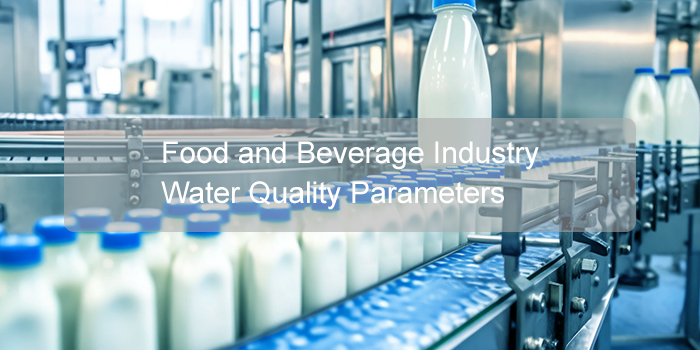
In the manufacture of dairy products, conductivity is measured when adding flavors, when cleaning equipment and when producing dry cheese; when processing yogurt, dry cheese and fresh milk, the pH value is measured, and during sterilization, ozone is measured.
In addition, during the purification process of food and beverage water, more parameters need to be measured, such as pH value, conductivity value, turbidity value, salt content, etc. Daruifuno focuses on the R&D and production of water quality analysis instruments. Its main products include pH ORP analyzer, conductivity analyzer, turbidity analyzer, COD analyzer, dissolved oxygen analyzer, ammonium analyzer, chlorine analyzer, etc. It also has related products in the food and beverage production process. If you are interested in our products, please contact us!
September 25, 2024
August 27, 2024
November 07, 2023
October 20, 2023
In the field of water quality monitoring and analysis, Daruifuno's water quality instrument development team has stringent requirements on the performance of sensors, especially for waterproof...
Overview As a high-precision water quality monitoring device, the signal detection process of fluorescent dissolved oxygen sensor involves knowledge and technology in multiple fields such as optics,...
Introduction to Electrode Glass Membrane The electrode glass membrane, a critical component in pH electrodes, possesses a series of unique properties that make it suitable for use in harsh...
Overview Water quality is a critical factor in environmental protection, industrial processes, and public health. Effective monitoring and control help maintain safe drinking water, optimize...
Email to this supplier
September 25, 2024
August 27, 2024
November 07, 2023
October 20, 2023
About Us
Related Products List
Contact Us

Send Inquiry
Privacy statement: Your privacy is very important to Us. Our company promises not to disclose your personal information to any external company with out your explicit permission.
Fill in more information so that we can get in touch with you faster
Privacy statement: Your privacy is very important to Us. Our company promises not to disclose your personal information to any external company with out your explicit permission.