

Send Message
Privacy statement: Your privacy is very important to Us. Our company promises not to disclose your personal information to any external company with out your explicit permission.
 Suzhou Delfino Environmental Technology Co., Ltd.
Select Language
English
Ammonia nitrogen refers to the nitrogen present in the water in the form of free ammonia NH3 and ammonium ions NH4+. Ammonia nitrogen is an important water quality indicator that has attracted much attention in aquaculture. Ammonia nitrogen in aquaculture water bodies is composed of non-ionized ammonia(NH3-N) and ionic ammonium(NH4+-N). It mainly comes from the transformation and decomposition of nitrogen-containing substances, including inorganic and organic nitrogen fertilizers, excreta and residues of aquatic products. Remaining bait and dead remains(algae), etc. The increase in ammonia nitrogen concentration in aquaculture water bodies, on the one hand, will cause eutrophication of the water body and lead to the outbreak of cyanobacteria. On the other hand, it can affect the growth of aquatic organisms and reduce their resistance to adverse environments and diseases,becoming the main cause of disease. Affect aquaculture production. The online ammonia nitrogen sensor developed and produced by Daruifuno can be used for real-time monitoring of ammonia nitrogen in aquaculture water bodies. It is a digital electrode with RS485 communication, which can be connected to industrial control equipment to regulate and control ammonia nitrogen in water bodies.
Moderate ammonia nitrogen in aquaculture water is beneficial to aquaculture. It can promote the growth of phytoplankton and maintain the stability of the aquaculture ecosystem. However, excessive ammonia nitrogen can have harmful effects on aquaculture organisms. The degree of harm of ammonia nitrogen to farmed organisms depends on the proportion of non-ionized ammonia in it, and the proportion of non-ionic ammonia in ammonia nitrogen depends on the water temperature and pH. Generally speaking, the toxicity of ammonia nitrogen at the same concentration is closely related to the pH and water temperature of the breeding water. At high temperature and high pH, the proportion of non-ionized ammonia is much greater than at low temperature and low pH, and the harm to aquatic organisms is even greater. China's "Fishery Water Quality Standards"(GB 11607-1989) does not list the standard value of ammonia nitrogen, only the standard for non-ionized ammonia, which is less than or equal to 0.02mg/L. Therefore, the NH351 ammonia nitrogen sensor integrates an ammonium ion electrode, which can compensate for pH and temperature to obtain more accurate ammonia nitrogen values. Daruifuno focuses on the R&D and production of water quality analysis instruments. Its main products include pH ORP analyzer, conductivity analyzer, turbidity analyzer, COD analyzer, dissolved oxygen analyzer, ammonium analyzer, chlorine analyzer, etc.
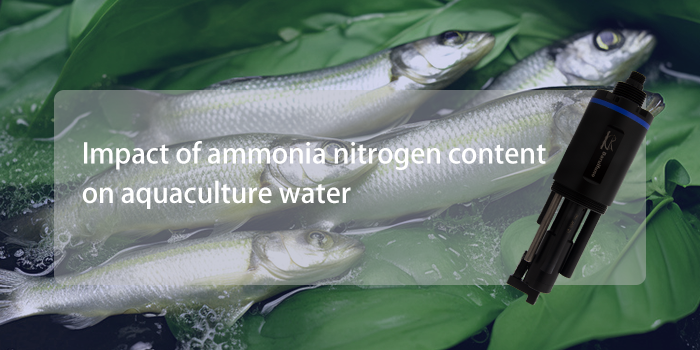
Excessive ammonia concentration in aquaculture water can have a serious impact on the catalysis of enzymes and the stability of cell membranes in aquaculture organisms, and destroy the excretion system and osmotic balance. As we all know, cultured organisms(fish, shrimp,etc.) need to exchange ions(sodium,calcium, etc.) with the water body. Excessive ammonia nitrogen will increase the permeability of the gills, damage the ion exchange function of the gills, and put aquatic organisms in stress for a long time. Excited state increase the susceptibility of animals to diseases and reduces the number of eggs conceived, reduces the survival rate of eggs, and delays spawning and reproduction. High concentrations of ammonia can affect the blood function of aquatic organisms and reduce the transport of oxygen between tissues. During acute poisoning, aquatic organisms show excitement, loss of balance in the water, convulsions, and even death in severe cases. It is very important to use and ammonia nitrogen analyzer to continuously monitor ammonia nitrogen in aquaculture water bodies. If you need this product, please contact us!
September 25, 2024
August 27, 2024

November 07, 2023
October 20, 2023
In the field of water quality monitoring and analysis, Daruifuno's water quality instrument development team has stringent requirements on the performance of sensors, especially for waterproof...
Overview As a high-precision water quality monitoring device, the signal detection process of fluorescent dissolved oxygen sensor involves knowledge and technology in multiple fields such as optics,...
Introduction to Electrode Glass Membrane The electrode glass membrane, a critical component in pH electrodes, possesses a series of unique properties that make it suitable for use in harsh...
Overview Water quality is a critical factor in environmental protection, industrial processes, and public health. Effective monitoring and control help maintain safe drinking water, optimize...
Email to this supplier
September 25, 2024
August 27, 2024
November 07, 2023
October 20, 2023
About Us
Related Products List
Contact Us

Send Inquiry
Privacy statement: Your privacy is very important to Us. Our company promises not to disclose your personal information to any external company with out your explicit permission.
Fill in more information so that we can get in touch with you faster
Privacy statement: Your privacy is very important to Us. Our company promises not to disclose your personal information to any external company with out your explicit permission.