Key Takeaways:
- Conductivity measures water's ability to conduct electricity (S/m)
- TDS (Total Dissolved Solids) indicates all dissolved substances in mg/L
- Salinity quantifies salt content, especially important in marine environments
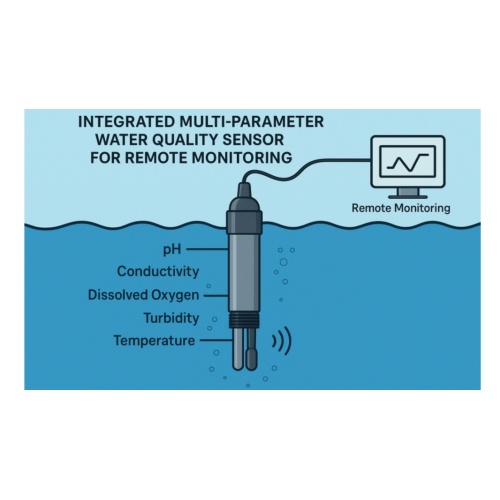
- Delfino's instruments provide simultaneous measurement of all parameters
Introduction to Water Quality Parameters
Standards such as conductivity, TDS (Total Dissolved Solids), and salinity are fundamental metrics in water quality testing. Delfino's advanced conductivity analyzer not only monitors conductivity values but also simultaneously displays salinity, TDS, and resistivity measurements. This comprehensive guide explains the relationships between these parameters and how they're converted and measured.
Conductivity in Water Quality Analysis
In ecology, conductivity represents a solution's ability to conduct electric current, measured in siemens per meter (S/m). It indicates the total concentration of ions in water that enable electrical conduction.
Factors Affecting Conductivity:
- Temperature: Conductivity increases with temperature (approximately 2% per °C). Standard measurements are referenced at 25°C.
- Doping Level: Higher concentrations of dissolved salts or electrolytes increase conductivity. Pure water has very low conductivity (high resistivity).
- Anisotropy: Some substances exhibit directional differences in conductivity.
Conductivity is a crucial indicator of water purity - the lower the conductivity, the purer the water. Our instruments measure conductivity coefficient at 25°C for consistent comparisons.
TDS (Total Dissolved Solids)
TDS measures all dissolved inorganic and organic substances in water, expressed in mg/L. It indicates the total amount of solutes, including:
- Dissolved minerals (calcium, magnesium, sodium)
- Salts (chlorides, sulfates, bicarbonates)
- Organic matter
- Other dissolved particles
Relationship Between Conductivity and TDS
Generally, higher conductivity correlates with higher TDS. The approximate conversion formula is:
TDS (mg/L) ≈ Conductivity (μS/cm) × 0.5
However, this relationship may vary based on water composition. For example, electrolyzed water may show higher conductivity due to increased charged ions (HO-) without proportional TDS increase.
Drinking water standards typically require TDS ≤ 1000 mg/L. Our instruments provide precise TDS measurements alongside conductivity readings.
Salinity Measurement Methods
Salinity quantifies the total salt content in water, particularly important in marine and brackish environments. Its measurement has evolved through several methods:
1. Historical Methods: Gram Newson Salinity Formula
Early 20th-century scientists defined salinity through complex chemical analysis:
- Converting carbonates to oxides
- Replacing bromine/iodine with chlorine
- Oxidizing organic matter
- Evaporating and drying samples
The original formula related chlorinity (Cl‰) to salinity (S‰):
S‰ = 0.030 + 1.8050 × Cl‰
2. Conductivity-Based Salinity Measurement
After 1950, conductivity measurements revolutionized salinity determination. The relationship between conductivity ratio (R15) and salinity was polynomialized:

Where R15 is the conductivity ratio compared to standard seawater (S=35.000) at 15°C and 1 atm.
3. Practical Salinity Scale (1978)
Modern salinity measurement uses the practical salinity scale (S), defined by conductivity ratio (K15) to a potassium chloride solution:
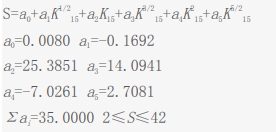
This scale maintains historical data continuity while improving measurement accuracy. When K15=1, S=35 (equivalent to 35‰ salinity).
Delfino's Comprehensive Water Analysis Solutions
At Delfino, we specialize in developing and manufacturing precision water quality analysis instruments. Our product range includes:
- Conductivity Analyzers: Simultaneous measurement of conductivity, TDS, salinity, and resistivity
- pH/ORP Analyzers: Accurate pH and oxidation-reduction potential measurement
- Dissolved Oxygen Meters: Optical and membrane-based DO measurement
- Turbidity Analyzers: Nephelometric and absorption-based turbidity measurement
- COD Analyzers: Chemical oxygen demand measurement for wastewater
- Multi-parameter Instruments: Combined measurement of key water quality parameters
All our instruments feature:
- High accuracy and repeatability
- User-friendly interfaces
- Durable, waterproof designs
- Data logging and connectivity options
- Calibration reminders and auto-ranging
Contact Delfino for Advanced Water Quality Solutions
Whether you require precise conductivity measurement, comprehensive water quality monitoring, or specialized analytical instruments, Delfino has the expertise and technology to meet your needs. Our products serve industries including:
- Environmental monitoring
- Aquaculture and fisheries
- Water treatment plants
- Industrial process control
- Research institutions
- Marine and oceanographic studies
Contact us today to discuss your water quality measurement requirements and discover how Delfino's instruments can optimize your monitoring processes.