

Send Message
Privacy statement: Your privacy is very important to Us. Our company promises not to disclose your personal information to any external company with out your explicit permission.
 Suzhou Delfino Environmental Technology Co., Ltd.
Select Language
English
pH is a scale of hydrogen ion activity in a solution, which is generally a measure of how acidic or alkaline a solution is. The pH value refers to the logarithm of the reciprocal of the hydrogen ion activity of the solution. The closer the pH value is to 0, the more acidic the solution is, and conversely, the closer the pH value is to 14, the more alkaline the solution is. At room temperature, a solution with pH=7 is called a neutral solution. The glass electrode PH Sensor has high measurement accuracy and is easy to operate. It is the most commonly used method to measure the pH value of water quality. The glass electrode head bulb is made of a special sensitive film, and the process of measuring the pH of the solution is actually equivalent to the ion exchange process. When the glass membrane enters the solution, the alkali ions on the surface of the membrane will dissolve and undergo an exchange reaction with the hydrogen ions in the solution, eventually reaching equilibrium. This process is very short, so wait until the pH count stabilizes before confirming the reading.
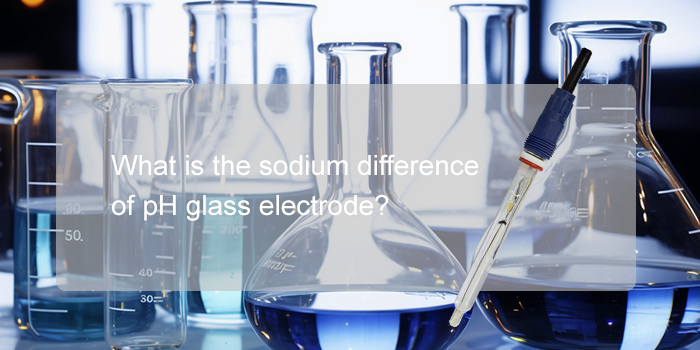
When measuring an alkaline solution with a pH value greater than 10, the large amount of sodium ions present in the solution will cause errors in the results, causing the reading to end up being low. This phenomenon is called "sodium difference."
The reason for this on-site occurrence is that during the ion exchange process between the hydration gel layer and the solution interface, not only hydrogen ions but also sodium ions are involved. As a result, the activity of H ions is increased as reflected by the electrode potential value, the pH value drops.
How to eliminate the sodium gap? The pH meter can be calibrated with a special low-sodium difference electrode or a standard buffer solution with an approximate pH.
Daruifuno's APX1-G2 online pH controller supports up to five-point calibration. Users can freely set calibration points. In strong acid or alkaline solutions, the more calibration points, the higher the accuracy. At the same time, you also need to pay attention to the selection of pH electrodes. When measuring strong acids and alkalis, you can choose the ASP120 series acid- and alkali-resistant glass electrodes.
Delfino company focuses on the R&D and production of water quality analysis instruments. Our measurement parameters include pH, ORP, conductivity, TDS, salinity, dissolved oxygen, COD, ammonia nitrogen, turbidity, chlorophyll, blue-green algae, residual chlorine, and chlorine dioxide. wait. In addition to ORP sensors, our main products include pH ORP analyzer, conductivity analyzer, turbidity analyzer, COD analyzer, dissolved oxygen analyzer, ammonium analyzer, chlorine analyzer, etc. At present, pH measurement can be roughly divided into three measurement methods: pH test paper method, electrochemical pH sensor and photochemical pH sensor. Each method has its advantages and disadvantages. The pH test paper method has the disadvantages of being unable to be repeated and cannot be monitored online. Although electrochemical pH sensors such as glass electrodes are reusable and highly reliable, they also have defects such as the signal being susceptible to electromagnetic interference, signal drift during long-term use, and difficulty in miniaturization, which limits their use in hygiene, high acid and alkali applications. Applications in special fields such as environment. An important research content of photochemical pH sensors is indicator fixation technology, but there are also shortcomings such as indicator leakage. Therefore, according to the characteristics and needs of a certain field, new pH sensors suitable for this field must be developed.
September 25, 2024
August 27, 2024

November 07, 2023

October 20, 2023
In the field of water quality monitoring and analysis, Daruifuno's water quality instrument development team has stringent requirements on the performance of sensors, especially for waterproof...
Overview As a high-precision water quality monitoring device, the signal detection process of fluorescent dissolved oxygen sensor involves knowledge and technology in multiple fields such as optics,...
Introduction to Electrode Glass Membrane The electrode glass membrane, a critical component in pH electrodes, possesses a series of unique properties that make it suitable for use in harsh...
Overview Water quality is a critical factor in environmental protection, industrial processes, and public health. Effective monitoring and control help maintain safe drinking water, optimize...
Email to this supplier
September 25, 2024
August 27, 2024
November 07, 2023
October 20, 2023
About Us
Related Products List
Contact Us

Send Inquiry
Privacy statement: Your privacy is very important to Us. Our company promises not to disclose your personal information to any external company with out your explicit permission.
Fill in more information so that we can get in touch with you faster
Privacy statement: Your privacy is very important to Us. Our company promises not to disclose your personal information to any external company with out your explicit permission.